5S methodology played a big role at Stocksigns, these are to Sort (Seiri), Set in Order (Seiton), Shine (Seiso), Standardize (Seiketsu), and Sustain (Shitsuke)  Here at Stocksigns our operational focus is on efficiency, accuracy and high-quality signage. This all plays a crucial role in providing the Exceptional Personal Service we’re proud of, so that’s why we flipped it all upside down!

Working with our consultant, Paul Henry, we overhauled our Operations department to create a leaner manufacturing process. A big part of this was implementing the 5S Methodology.

What is the 5S Methodology Process? 

The 5S Manufacturing methodology is a Japanese philosophy to help create a workplace best suited to visual control and lean production. As well as helping to develop a better quality of life and creating better mental and physical health.

What are the 5S Pillars?

It starts with Sort (Seiri) which means to organize where we separate tools, parts, and instructions for what is needed and eliminate what’s not wanted. At Stocksigns we had to get rid of a lot of stock that hadn’t been used in 10 years and was just simply laying around.

The second step is to set in order otherwise known as Seiton, which is to arrange neatly being able then to identify tools and parts for a much easier use. In shorter terms to organise what remains.

Step three is to shine  (Seiso) which means cleanliness or shine. This is to conduct clean-up in the work area.  At Stocksigns everyone in manufacturing got involved in painting, cleaning, re-organising, implementing new processes, throwing out processes, and product range refinement.

Then we look at standardising (Seiketsu) where the first 3 tasks are all maintained daily for the workplace’s perfect conditions and have regular cleaning and maintenance.

Finally, to Sustain(Shitsuke) when following the first 4S will help be sustainable. As Paul Henry said, it’s all about sustainability and making sure the process stays sustainable otherwise there is no point doing it in the first place.
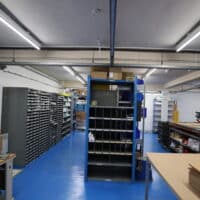
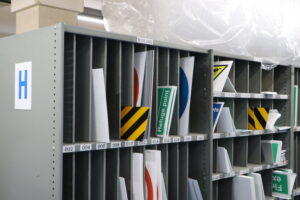
The Stores are at Stocksigns, all cleared up.
A grey shelving unit, overfilled with signs by Stocksigns.

Stocksigns prides itself on exceptional personal service, so implementing 5S has helped for the first time to ensure we continue to deliver high-quality products.  Over the past 70 years, we have had many methodology techniques but we feel like 5S Methodology was the right fit for Stocksigns, not only has this helped us keep consistent levels of quality and lead times, which keeps the customer happy, it has also helped with overall happiness in the workplace as everything runs a lot smoother with less internal issues.

Some steps such as getting rid of the old stock may feel like they make the process longer, but they drastically help reduce mistakes. So the whole Stocksigns team needs to keep educating and reminding themselves as to why we do some of the things we do, so people aren’t tempted to try and take shortcuts.

Each department around the business had different benefits to this for example, In operations as started by Dave these were ‘Pure and simple, with a profit margin and happy customers’ whereas in Sales Josh said that their biggest benefit was “giving the team even more confidence whilst making the promise to our customers, that we get it “right first time”. It is a lot easier to sell something that you well and truly believe in. No one in the world is perfect, and we don’t claim to be, but we are pretty damn good at what we do.” As well as getting rid of so much stock that was being held, some for 10 years. We couldn’t afford to make many mistakes. So, we plan to get it right the first time, every time so that we can focus our resources on the next project/customer that is in need. 5S has helped streamline everything, keeping both employees and customers happy. – The project was well worth it.


Dave Cload Operations Manager
Josh our UK sales Manager
Our operations Manager, Dave played a key role in making the ship run smoothly, Dave’s role involved overseeing and facilitating the implementation of 5S and the operational changes required in all areas of production. This started with raw materials and goods coming in, right the way through to finished jobs leaving the building. The hardest part of 5S was implementing new paperwork and processes to ensure we could measure and gain knowledge from the output, with measured information. As well as  then make informed decisions on whether you are as efficient and effective. If you aren’t, then training/process change may be required. 
Our UK Sales Manager, Josh said “The hardest part was learning and understanding all the elements of operations involved. If I didn’t understand what happens after the sales process, then I wouldn’t be able to understand the true benefits of 5S. It has helped me become a better manager for the sales team as I now have a much broader knowledge of the wider company”. Josh’s main role involved focusing on streamlining and simplifying the process for our sales team to bridge the gap between operation and sales.

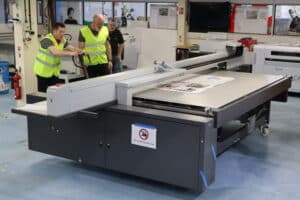
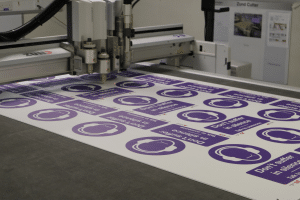
The 5S project has been followed by Stocksigns and has been able to keep that process sustainable. We invested in new machinery such as a brand new Zund Cutter and SwissQprint Impala, which helped develop areas of the factory to ensure a smoother workflow. The steps we have taken will set us up for the next decade at least, but that’s not to say we are finished improving and tweaking our processes. Stocksigns actively encourage suggestions or questions from everyone within the business, one person alone can’t oversee everything. It is a collective effort to keep the 5S sustainable within our workplace.
Here at Stocksigns, sustainability sits at the heart of everything we do

Every innovation, every progressive step must be a step towards a better future. That step could be towards lowering our carbon footprint, creating a better place to work or helping to provide a better future. By taking this approach, we will nurture a great place to work, allowing us to reach our full potential and ultimately share in the company’s success.

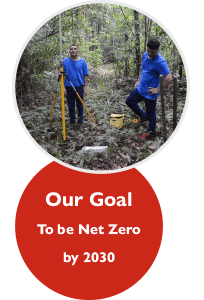
The goal – Net Zero by 2030

A couple of years back we set ourselves a goal, a goal for both Stocksigns and Messagemaker Displays completely Net Zero by 2030. As such, we have been tracking our carbon footprint for over four years now. During this time we have achieved Carbon Neutrality through offsetting and reducing our carbon emissions and we are well on the path to achieving our goal of being Net Zero.

environmental carbon off-setting by Stocksigns

What we did in 2023 to help achieve this

closed Loop compatible Correx signage by Stocksigns
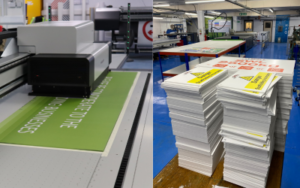
Stocksigns new SwissQprint Impala 4
Stocksigns Solar Panel Installation

The implementation of an end-to-end signage recycling scheme

It’s estimated that the construction industry generates around 62% of the UK’s waste and 32% of all waste that’s sent to landfill. As both a manufacturer and supplier, we are committed to mitigating our impact on the environment. As such, we have come up with a solution that overcomes sending redundant construction signs to landfill.

Our temporary construction signage is manufactured at our Surrey HQ using strong, weather-resistant, PVC-free corrugated polypropylene sheets.

Replacing old equipment for new, more efficient models

Back in 2010 we brought a first-generation SwissQprint Impala, the 15th one in the UK to be precise. This machine printed reliably for us for over 12 years, but we eventually decided it was time for an upgrade.

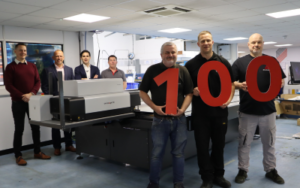
And so, after months of researching the market, we approached swissQprint again – and brought ourselves a new printer. Our new Impala 4 printer (the 100th SwissQprint printer in the UK) is four times faster than our previous printer whilst using one-tenth of the energy to do so.

Introduce renewable technology and power across our business

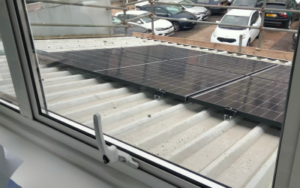
In August last year we installed solar panels on the roof of our building. These solar panels produce around 65,662 KWh, substantially contributing to about a third of our daily electrical consumption and saving 15.30 tonnes of CO2 emissions annually.

Since their installation 7 months ago, our solar panels have now generated approximately 15,839 KWh or 15.8 MWh of power.

That is the equivalent of running 113 LED lights 24/7 for a whole year, or running 19 refrigerators for the same amount of time.

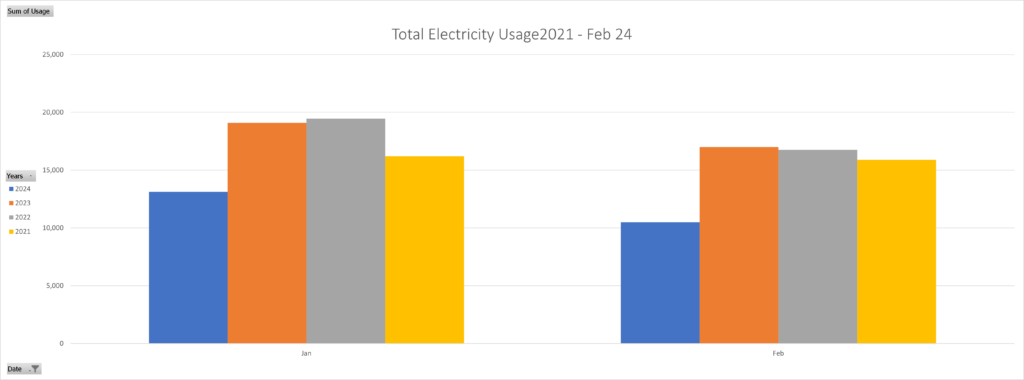
Stocksigns Ltd Energy Usage chart 2021 -2024
Measured in kW

Reducing our Energy Usage

Over the past four years, we have been committed to measuring and reducing our electricity requirements as a business.

Overall, our energy usage for January and February this year dropped about 34.5% in comparison to the same period in 2023.

What we’re doing in 2024

New Cutting Machinery – Arrived March 2024

Supply Chain Sustainability School – Achieve Gold

The importance of people and Social value

We believe that if you take care of your staff, your staff will take care of your customers. Stocksigns invests in training and well-being initiatives to help keep our staff happy, healthy and motivated. Our staff benefit from health checks and team walks, we also introduced a cycle-to-work scheme and put mental health support in place.

For professional development, we offer bespoke training and coaching to allow individuals to reach their full potential – with quarterly recognition awards for our best-performing employees.

Outside work, Stocksigns staff take part in regular volunteering and charity events, including our annual mountain climb for The Children’s Trust.

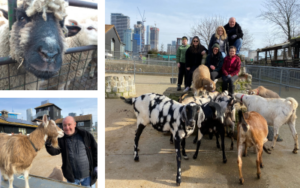
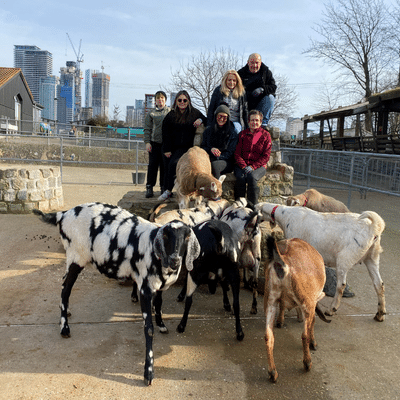
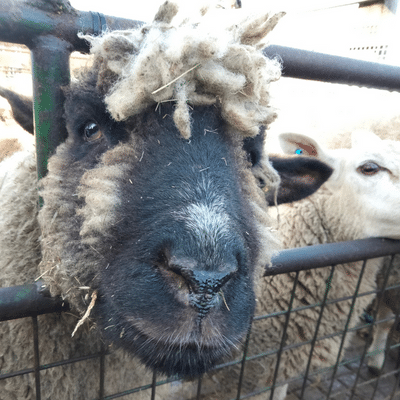
The team posing with various farm animals, including goats and sheep
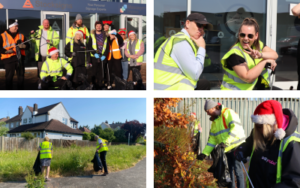
Members of the Stocksigns team wearing high-vis jackets and picking up litter
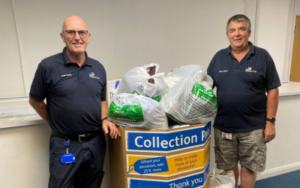
A donation bin filled with bags of donations, two men from The Children's Trust pose alongside it
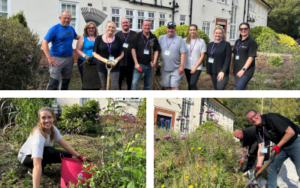
The Stocksigns team weeding and cleaning up a local charity's garden area

Volunteering at Surrey Docks Farm

Surrey Docks Farm is a working city farm and charity that enables the community to learn about farming, food production, and the natural environment. They deliver a range of accredited training projects for adult students with learning disabilities and get involved with community projects.

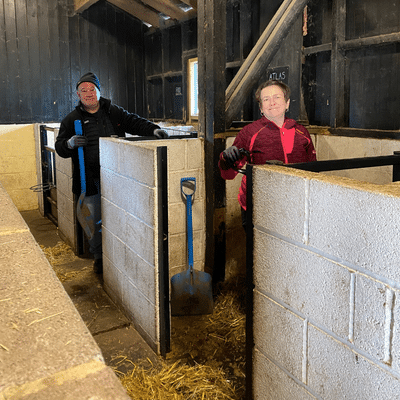
In February 2023, the Stocksigns team helped out for a day, mucking out the goats, sweeping the goat and sheep yards, grooming and mucking out the donkeys, digging, and then finally wheeling & spreading woodchips on the wildlife garden paths.

Litter Picking in our local area

Sometimes the biggest difference can come from the smallest of actions. In both the summer and winter of 2023, members of the Stocksigns team took part in collecting litter from around the local area around our premises.

The team enjoyed getting out and about whilst doing our bit for the local community, collecting about 20 rubbish bags each time.

Some of our most notable finds in these litter picks include many leftover maccies wrappers, a multi coloured children’s toy and even an entire scooter that was abandoned in the bushes!

The Children’s Trust Donation Station

Over the past few months we have had a donation station from The Children’s Trust in our office.

This offers a great way for the Stocksigns team to de-clutter their homes and get rid of any unwanted items.

In the last collection the team managed to gather over 19 bags worth of donations and goodies.

These donations have been rounded up and will be sold to help raise more funding in one of their charity shops.

The Children’s Trust gardening

The beautiful grounds surrounding the Children’s Trust play an important role in providing spaces for children and their families, to relax and reflect.

Their gardens offer a space for fresh air, play, sensory development and are a vital part of The Children’s Trust life.

The trust has 24 acres of woodland and gardens, so keeping them maintained is quite a task.

Back in October, our team took part in an effort to help maintain the grounds, dealing with some troublesome weeds that were taking over a part of the garden.

Olympus Hike 2024

Olympus Climb 2024

Every year the team at Stockigns/Messagemaker Displays, along with some of our customers & suppliers take on an epic challenge in the aid of raising money for our local charity – The Children’s Trust. Last year we scaled Poland’s highest mountain and raised an amazing £15,000.

We are back again with another challenge for 2024, this year we will be taking on ‘The Home of the Gods’ Mt. Olympus! A massive 9500ft mountain in Greece.

Our chosen charity is again The Children’s Trust. The UK’s leading charity for children with injury. Based in Tadworth (local to our HQ) the Trust runs a range of specialist care, education and therapy services for children and young people from across the UK and the UK’s largest rehabilitation centre for children with acquired brain injury (ABI).

Here at Stocksigns, we pride ourselves on providing exceptional personal service to all our customers.

We manufacture high-quality signage for the construction, traffic management, and facilities management industries. In this blog post, we’ll share some of our favourite customer testimonials and reviews to give you an idea of the kind of experience you can expect when doing business with us.

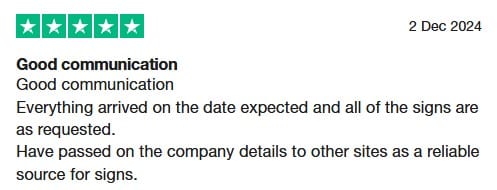
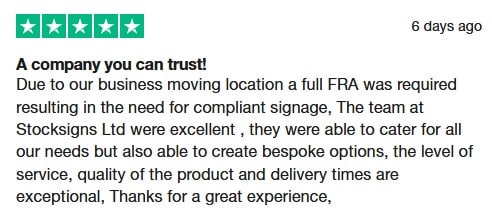
Top Stocksigns Trustpilot Reviews of 2024

At Stocksigns, we’re dedicated to building a sustainable future through everything we do.

We’re continually working to reduce our carbon emissions, setting ambitious targets which have since helped us to reach net neutral status.

However, there’s more to be done. This journey towards sustainability isn’t about ticking boxes; it’s about continual improvement and a commitment to safeguarding the environment for future generations.

Reducing carbon emissions

Our approach to sustainability starts with measuring, setting targets and reducing our carbon emissions. We’ve already achieved net neutral status thanks to a combination of reduction efforts and carbon offsetting measures.

These include supporting clean cookstoves in Kenya and establishing wind farms in India to promote sustainable energy. We’re working towards a green future globally by supporting initiatives and adopting frameworks such as REDD+ (Reducing emissions from deforestation and forest degradation in developing countries).

Stocksigns want to become net zero by 2030

Sustainable Signage Products

We have a substantial range of sustainable signage made from durable and recyclable materials, including aluminium composite and stainless steel. Our corrugated plastic signage is made from polypropylene instead of PVC.

Correx Signage Stack by Stocksigns

The Road to Net Zero by 2030

At Stocksigns, we’re on a clear path to achieving Net Zero 2030 and have taken significant steps to make this goal a reality. Our measures include reducing our vehicle fleet, adopting renewable energy resources and training our staff to minimise waste production. As part of our green initiatives, we have recently installed solar panels on our roof that are estimated to produce around 65,662 kWh, saving 15.30 tonnes of CO2 emissions annually. This will substantially contribute to about a third of our daily electrical consumption. We have also sought to install energy-efficient technologies throughout of production process, for example our Impala 4 printer which is four times faster than our previous printer but uses one tenth of the energy to do so.

Supply Chain Sustainability School

We recognise that sustainability is a collective journey and that our supply chain and customers have the same goals. We’re ISO 14001 accredited and a member of the Supply Chain Sustainability School (SCSS), which focuses on the three core pillars of environmental, social and economic sustainability. The SCSS has been invaluable and has helped us develop new ideas and strategies to become more eco-friendly and action-orientated within our supply chain.

Supply Chain Sustainability School Silver Badge

Monitoring our Progress

Strategies are only worthwhile if you monitor and review your progress, which is why we have been working with an environmental consultancy for the past four years to calculate our carbon footprint, establish targets and evaluate our carbon emissions. Our annual assessments help us gain valuable insights into our environmental impact and pinpoint any causes of increased emissions.


For example, our most recent 2022 Carbon Management Report showed that most of our activities have had a drop in carbon emissions, apart from two areas. Our electricity consumption increased by 14% last year. However, considering the electricity we purchase comes from renewable sources, our emissions are zero. Our business travel was also a significant contributor to our carbon footprint last year. Again, after looking into the rise further, we identified that this was because we resumed our overseas charity hikes in 2022 following the COVID-19 pandemic.

The Future of Stocksigns and Sustainability

Our net zero journey is about our commitment to driving positive environmental change. Through carbon reduction efforts, sustainable signage, a data-driven approach and a clear roadmap to Net Zero 2030, we’re ensuring that our environmental promises are not just words but a measurable reality.

New Fire Safety Legislation


Following five years of consultation, in 2022 a new fire safety legislation was introduced in response to the 2017 Grenfell Tower tragedy.

Amongst the new regulations were rules on wayfinding signage, which came into force in January 2023. If you are planning a new project or are involved in the retrofit of an existing building, it is crucial that you understand these requirements and ensure that any wayfinding signage is implemented correctly.

Background

In the wake of the Grenfell Tower tragedy in 2017, a series of inquiries were launched to establish the cause of the fire, the building materials responsible for its rapid spread and why the rescue services struggled to save trapped residents.

Amongst other conclusions, Grenfell Tower Inquiry Phase 1 noted that the 24 storey block of flats had only one staircase with sporadic signage to indicate floor and flat numbers. This combined with poor visibility and sign design made it difficult for the emergency services to judge which floor they were on or to find the flat they were being directed to as quickly as possible. Another factor contributing to the tragic event was the result of refurbishment work in the tower. Wayfinding signage had not been updated and, as a result, some of the signs were incorrect, misleading the firefighters further.

As a result of the inquiry and its findings, the report recommended mandatory wayfinding signage should be introduced in specific circumstances.

What has changed?

The inquiry recommended (Recommendation 33.27) that all existing high-rise buildings – those with a roof height over 11 metres – be fitted with clear wayfinding signage that can be read in all conditions. These recommendations generated The Fire Safety (England) Regulations 2022, Regulation 8, which legally mandates that all existing high-rise multiple occupancy buildings be equipped with wayfinding signage on the landings of all protected stairways, and every protected corridor or lobby that a firefighting lift opens into. This signage should also clearly identify each floor and the flat numbers found on that floor.

This comes into force alongside existing legislation, which already requires all new-build high-rise residential buildings to have the aforementioned wayfinding signage. However, it is advised that ‘responsible persons’ may wish to consider installing signage in all types of buildings – high-rise or otherwise – in order to protect residents.

In addition to specifying which buildings require signage, Regulation 8 of The Fire Safety (England) Regulations 2022 also states that all signage should conform to paragraphs 15.14 – 15.16 of Approved Document B Volume 1. This document specifies the location, size, shape, visibility and height from the floor of any wayfinding signage in a building and should always be consulted when planning a project.

How we can help

Through careful consultation with a dedicated account manager, we can help our customers understand and implement the relevant regulation wayfinding signage. Furthermore, by managing and producing all our quality signs in house, we are able to tailor each product to the needs and preferences of the customer – producing the ideal custom signage for your next project.

In addition to this, because our catalogue of fire safety signage is compliant with IS07010, our customers can rest assured that our in-house experts can deliver all the necessary signage to satisfying The Fire Safety (England) Regulations 2022.

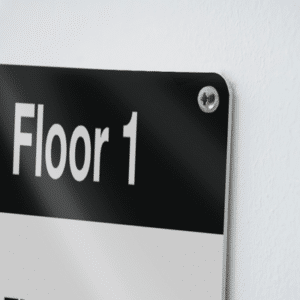
Wayfinding wall sign

By Melissa Barker – Stocksigns Ltd Group Marketing Assistant and Resident Beagle Mum

Let’s face it, we all need road signs to help direct us from A to B.

Guiding you along the way, they keep you on track and make you aware of the dangers ahead. But some signs, they just know how to make your journey so much better. Some weird, others funny, they compel you to stop in your tracks and have a good laugh.

But in true British fashion, there are instances where we come across some utterly bizarre road signs and meanings that put a smile on our faces behind the wheel.

Prepare to be amazed by the collection of sign pictures that I have taken when I am out and about! Signs that I find amusing and baffling around Cornwall, Surrey, and Kent. You will have to let me know if you find any odd signs on your everyday commute. But don’t take your eyes off the road for too long.

Wild animal road signs are used to advise oncoming drivers of the presence of wild animals which could create a potential hazard on your route.

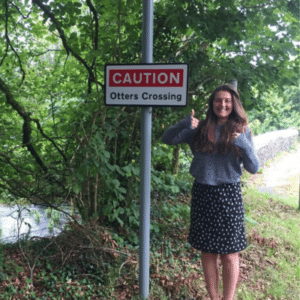
Otters Crossing Sign in Cornwall

Otter crossing spotted in Cornwall!

But sadly, I didn’t spot any otters whilst I was there. Maybe next time.

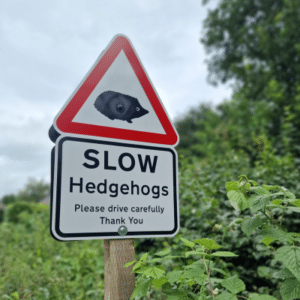
SLOW - Hedgehogs Sign

Why did the hedgehog cross the road?

To get to the other side obviously!

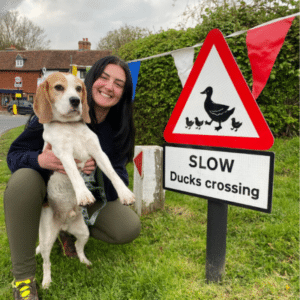
Ducks Crossing - Melissa And Chewy

All the ducks are swimming in the water according to Lemon Jelly as they once sang about it in the late 90s, apparently, they are not. They are crossing roads, I guess to prove they are no chickens!

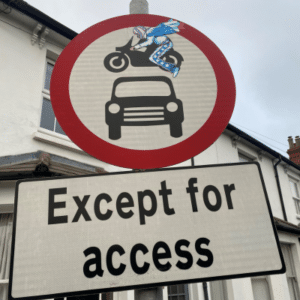
Except For Access with a sticker

As cool as it looks, you mustn’t try to pull off motorbike stunts over cars whilst wearing jazzy outfits. Best to leave that to professional stunt performers.

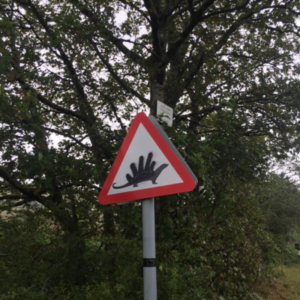
Totally not a stegosaurus sign

I’m pretty sure that the Stegosaurus became extinct 150 million years ago in what is now Utah, so I’m not quite sure how they ended up in present day UK!

Although, upon closer inspection it does seem to be another one of those otter crossing signs – someone has just drawn on it.

Why did the Archaeopteryx catch the worm? Because it was an early bird!

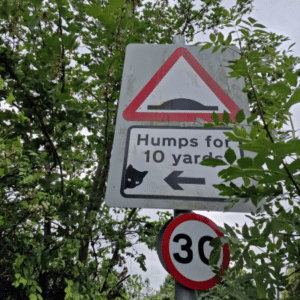
Humps for 10 yards

Throughout Kent, there are hundreds of road signs that have a sticker of a black cat peering around in the corners. The mysterious black cat has been popping up on road signs along major routes and rural lanes. Yet despite the fact that cats appear everywhere and are very common no one seems to know the answers.

Black cats can have various superstitions surrounding them, with some suggesting they bring bad luck, others good luck. Whatever the reason, it’s still fun to spot them.

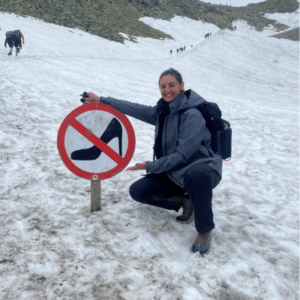
No high heels on the mountain

Here’s one that we spotted on our annual charity mountain hike in Slovakia this year.

I’m not quite sure who would attempt to climb the highest mountain in Poland in high-heels – but whoever they are they’re not allowed to do it anymore!

My ankles hurt just thinking about it.

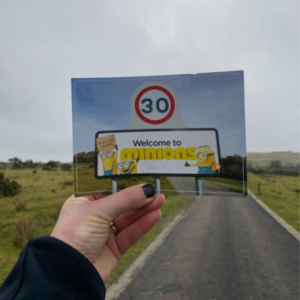
Minions Sign
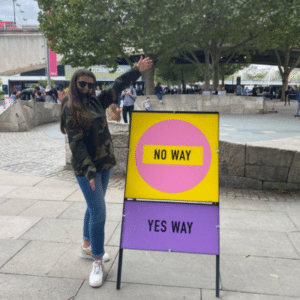
No Way, Yes Way
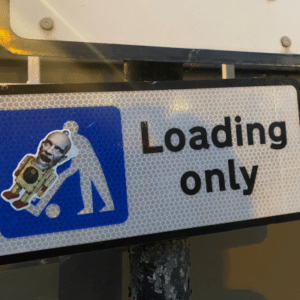
Loading Only Sticker
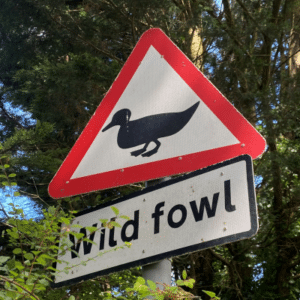
Wild Fowl Sign

View our range of CE Certified UK Road Traffic Signs

knights-brown-blog-3
CE certified traffic signs from Stocksigns Ltd

Meet the team!

Here we catch up  and meet the team with our Marketing Executive Kelly Spear to find out about her background, her current role and also her extensive pet collection.

How did you get into marketing and what first led you to Stocksigns?

My career began in 2017 when I joined a global technology provider and distributor Westcon-Comstor as a Marketing Apprentice. Since then, I’ve worked for a number of large B2B companies including Sivantos Group and, most recently, Restore Record Management, working my way up from Marketing Assistant roles and progressing to Marketing Executive. Last year I secured my job here at Stocksigns. The team have been incredibly welcoming and I’ve enjoyed getting up to speed with both the Stocksigns and Messagemaker brands ever since.

Kelly - Marketing Executive at Stocksigns

What does your role entail?

My role is incredibly varied, which I really love. I cover everything from organising marketing campaigns and materials, to drafting and uploading blogs, updating and maintaining the website, creating email campaigns, helping with social media content and reporting on campaign results to the sales team. There’s always something different to do – I think the only constant is the amount of tea I drink every day!

Although most of my work has a digital focus, Daniella, our Marketing and Graphics Manager has been on maternity leave so I have been looking after a few other marketing areas, including managing the flow of content from our external PR agency.

You also have an important role to play in terms of sustainability at Stocksigns, tell us about that?

When I first interviewed with Daniella and Danny, our MD, I mentioned my interest in sustainability – both the environmental and social aspects. While I personally do my best to recycle and live sustainably, I feel that big corporations need to take more accountability as there’s only so much the average consumer can do or afford.

Having heard me speak passionately on the subject and agreeing, Danny encouraged me to sign up to the Supply Chain Sustainability School on behalf of the company.

The Supply Chain Sustainability School is a free-to-join learning environment that aspires to upskill those working within the built environment sector. So far, we have reached Silver status as a result of our continued engagement with the school, and using the knowledge I’ve gained, I’ve been running internal CSR training sessions, covering topics such as the importance of ESG/CSR and the circular economy.

I also regularly share insight from the school with the wider company at our monthly meetings, and I look forward to telling them all about the School’s Net Zero Summit that I am attending in September.

Supply Chain Sustainability School Silver Badge

What do you like to do in your spare time?

I love animals and have quite the menagerie at home. I have tarantulas in just about every size, shape and colour (including one so pink that it would fit right into the set of Barbie), scorpions, a centipede, various colonies of isopod species, 3 leopard geckos, 3 crested geckos, a leachianus giant gecko, a dwarf monitor lizard and a box full of fruit beetles – who needs to go to the zoo when there’s one at home!

I spent some time studying Animal Care at Brinsbury College before my apprenticeship and I also used to volunteer at a local falconry centre. I would love to one day get involved with various animal conservation programmes and have been looking into working with sharks off the coasts of South Africa.

Kelly and her pet monitor lizard
Kelly's Mandalorian helmet

Aside from animals, I enjoy gaming and can often be found on my PC (or Nintendo Switch during work breaks) playing Warhammer 40,000 games, various survival crafting titles, and the occasional bit of Stardew Valley or Minecraft. I’m also admittedly a bit of a Star Wars nerd – I even have my own Mandalorian cosplay – and am planning to go to the next Star Wars Celebration in Japan in 2025. Finally, I also love creating artwork, and at one time considered a career as a digital illustrator and animator. As such, my notepads are always covered in doodles – mostly of dragons.

What do you like about working at Stocksigns and what do you hope to achieve?

One of my favourite things about Stocksigns is how close and supportive we are as a team. In a smaller company, you feel more integral and more appreciated, while milestones are more highly celebrated as everyone feels so invested in the company, its progress and development. It makes for a really positive environment.

In terms of what I would like to achieve, I’m determined that we will soon reach Gold status at the Supply Chain Sustainability School and also hit Net Zero by 2030, if not sooner. Personally, I’m working on building my confidence and skillset to include all areas of marketing and have found covering for Daniella in some areas to have been a real confidence boost.

Reducing accidents in the workplace is extremely important in all industries, including manufacturing, heavy industry, on construction sites but also important in office-based environments too.

Safety signage is an essential tool in ensuring compliance with specific legislation. Safety signs help create a safe working environment, offering guidance to those in the workplace or workplace area, whether they are members of staff or the general public. This helps protect people and property when unexpected occurrences arise by warning of potential hazards and reminding workers of safety measures and protocols that must be followed.

Aside from providing essential information to ensure safety, modern safety signs are more visually appealing and easier to understand and follow.

The first step towards understanding which signage is required is to undertake a risk assessment. Identifying potential hazards and risks posed to people working or visiting your site is paramount. According to the Health and Safety (Safety Signs and Signals) Regulations 1996, employers are required to use adequate safety signage where there is a significant risk to health and safety.

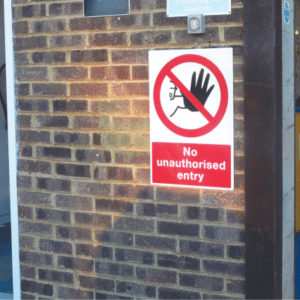
Prohibition - No Unauthorised Entry Sign on a brick wall

Each work area might require different workplace health and safety signs and symbols. This is because each work area can have a plethora of different hazards. A risk assessment of each activity or designated area will help identify hazards. Appropriate actions for ensuring safety can then be drawn up and selecting the appropriate safety signs can then be selected. Where possible safety signs are shown to be changed (at least their location) to keep the safety message fresh and to avoid “sign blindness”.

Safety signs and symbols consist of messages, words and pictorial symbols with a variety of sizes, shapes and colours. All the shapes and colours are standardised. Each shape has a different meaning, and each colour reflects a specific meaning.

Safety signs and symbols are important safety communication tools, indicating various hazards that are present in plant sites or workplaces. Effective signage warns workers to watch out for hazards by giving required information and safety instructions, increasing safety awareness.

Read our blog Sign Blindness: What is it and How can it be Avoided?

Once the relevant signage is in place, there is a legal duty for companies to maintain safety signs and ensure that employees receive correct instructions and training on what the safety signs mean and the measures that must be followed.

A quick guide to safety symbols

Click the images to view the signs in our web shop

prohibition
Prohibition

A red circular band with a diagonal crossbar on white background, the symbol within the circle to be black denoting a safety sign that includes a certain behaviour is prohibited.

hazard Health and Safety signs from Stocksigns
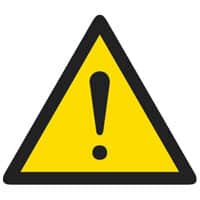
Hazard

A yellow triangle with a black border and a symbol in yellow denoting a safety sign that gives a warning of a hazard.

mandatory
Mandatory

A blue circle with a white symbol denoting a sign that indicates that a specific course of action must be taken.

Fire Equipment

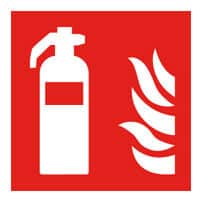
A red rectangle or square with a symbol in white denoting a safety sign that indicates the location of the firefighting equipment.

safe-condition
Safe Condition

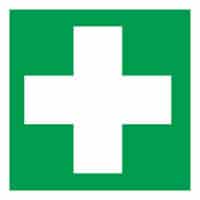
A green rectangle or square with a symbol or text in white denoting a safety sign providing information about safe conditions.

Safety Signs are crucial in any work environment. The primary importance of displaying them is to prevent injury and ensure staff and visitors are aware of the possible dangers and hazards in certain situations and/or environments. Whether you require permanent signage to notify people of prohibitions, warnings, and mandatory requirements or for locating and identifying emergency escape routes and first-aid facilities – there is a Stocksigns solution for you!

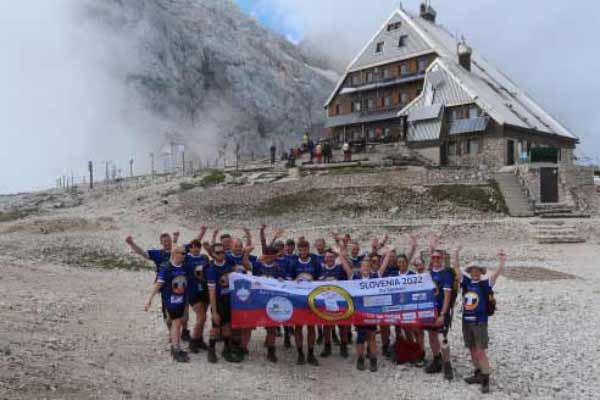
This year our team have endeavoured to climb the highest mountain in Poland, Mount Rysy and take a trek through Paradise Valley for local charity – The Children’s Trust

Stocksigns Marketing Assistant, Melissa Barker, gives the scoop on how it went down:

Now I have had the chance to take stock & reflect on what’s been an unforgettable few days in Slovakia, the graft, the slog, the self-doubt. The team struggling, and you want to give up but know you shouldn’t. You Finally approach the summit, eyes widen, heart races. You find those final steps, raise your hand in victory touch the summit stone… Then it’s all downhill from there!


Day 1 Paradise Valley

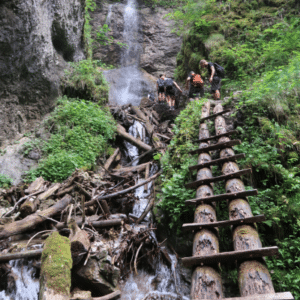
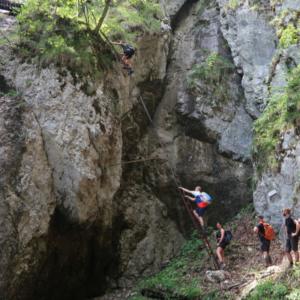
No snakes just ladders and lots of them! We walked just over 13 and a half miles with an elevation game of 2999ft. This was the warm-up of exceedingly strenuous valleys, gullies, and ravines. It includes 75m ladder climbs, waterfalls, and some jaw-dropping scenery. For this challenge, A person who is sure-footed, unlikely to slip or stumble, and has a good head for heights is the ideal candidate!

I am pleased to say that even with a wobbly ladder here and there and no safety equipment, the team took it all in their stride and got on with it.

It was a peak experience!

Although our legs really hurt after this hike. But that’s fine, who KNEES ’em?

Slovakia Summits 2023 - The Team Climb some Ladders
Slovakia Summits 2023 - A precarious ladder climb

Day 2 Mount Rysy climb

A 13hr, 14 miles & 1,400m ascent of Poland’s highest mountain from the Slovakian side of the High Tatras. It was a very early start for the crew again on Sunday. We had no idea how long this would actually take. Day two was so tough. As one, we tackled valleys, a series of rails, cables, and bridges steep rocky switchbacks, scorching midday heat & some lethal snowy sections to reach the 2500m summit.

No one was prepared for the steep slippery snow section, we had quite a few falls and lots of snow ploughing on the way down. There were so many technical sections. If you are not one for heights then this would have not been for you! walking next to the rock’s face, a tad scary.

Simply a monumental effort from everyone involved. The scenery was out of this world.

After the poorly knees, the crew put in a ton of leg work today. Actions peak louder than words.

Getting to the top is optional. Getting down is mandatory! We have definitely put in the legwork!

Slovakia Summits 2023 - The Climbers Forge ahead!
Slovakia Summits 2023 - Overlooking a stunning lake and the Slovakian mountains

The charity for this year’s challenge is The Children’s Trust. The UK’s leading charity for children with injury. Based in Tadworth (local to our Stocksigns/Messagemaker HQ) the Trust runs a range of specialist care, education, and therapy services for children and young people from across the UK and is the UK’s largest rehabilitation centre for children with acquired brain injury.

The Stocksigns team was joined by friends from Balfour BeattyGatwick Airport, VVB Engineering, Mason Street Furniture, Tennants UK, and more. We are proud to share with you that over £15,000 has been raised for the Children’s Trust.

We are so pleased and proud to share with you that we raised over £15,000 for the Children’s Trust in Tadworth. Thank you all for your support and donations, this fantastic amount of money, and will go a long way in helping this fantastic charity.

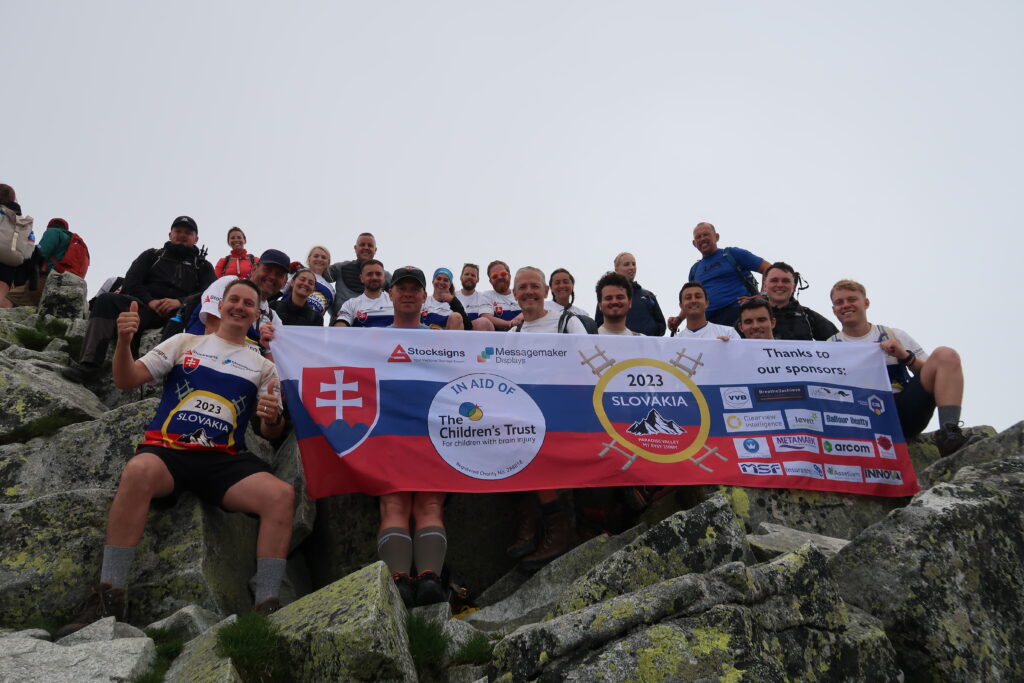
Slovakia Summits 2023 - The crew pose at the top of the mountain with the Charity banner
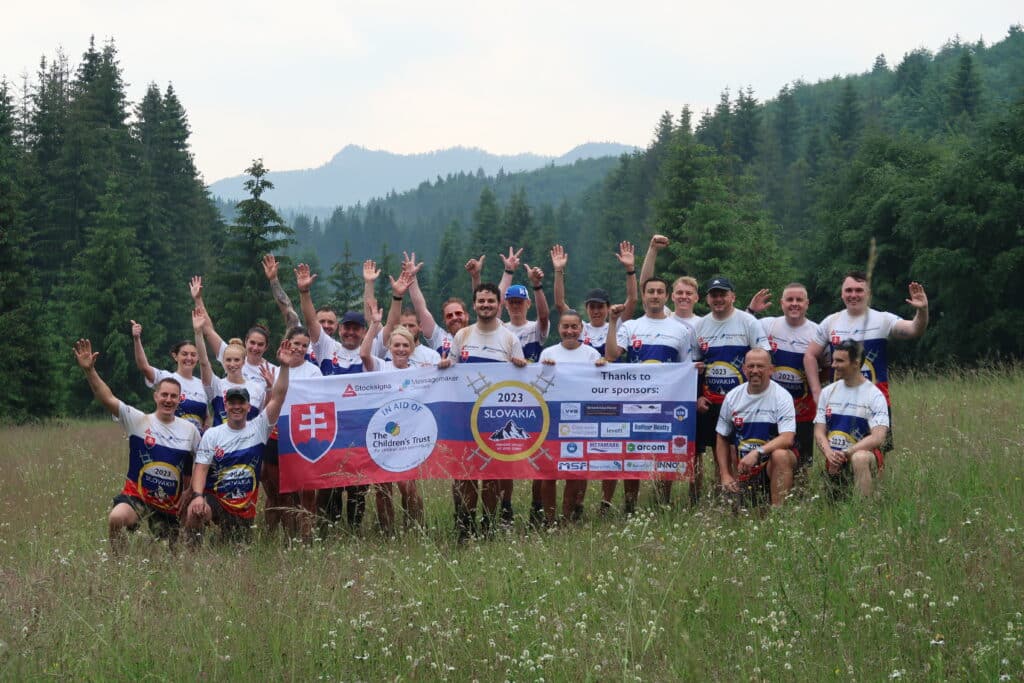
Slovakia Summits 2023 - The crew pose with the Charity banner

Safety signage plays a crucial role in maintaining a safe working environment within industrial spaces.

The role of signage is to provide important information and instructions to workers and visitors, helping them to avoid potential hazards and accidents.

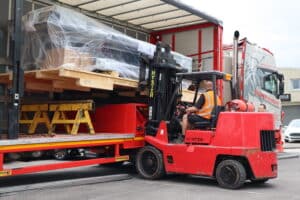
Within industrial spaces, there are a plethora of risks to a person’s safety. From production line machinery and manufacturing equipment to forklifts, working at height and the occasional stray wire or packaging that poses a trip hazard.

In addition to improving safety, effective signage also ensures compliance with relevant regulations and standards. It is important to regularly review and update signage to ensure that it remains effective and relevant to the changing needs of the workplace. Overall, safety signage should be considered a key component of any safety program in industrial spaces.
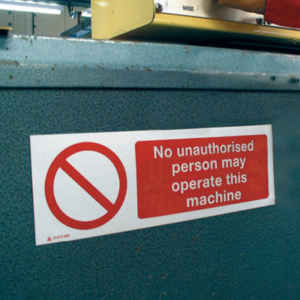
Signs play an essential part in highlighting the dangers to avoid injury to staff and visitors. Stocksigns has a wide range of standard signs which are crucial to either highlight dangers with machinery or instruct what PPE needs to be worn.

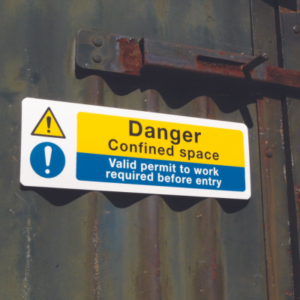
Danger Confined Space Sign
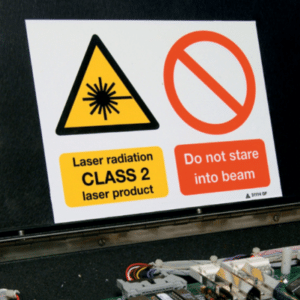
Laser Radiation Hazard Sign

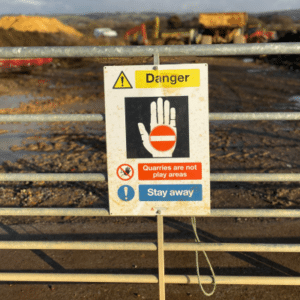
Safety Signage and the Dangers of Quarries

By their very nature, quarries can be dangerous places to work in and visit. Heavy plant and machinery, mining and moving materials back and forth, cliff faces, unstable edges and sudden drops, as well as the risk of falling debris.

Though not all hazards within a quarry environment are potentially fatal, plenty of other risks can severely impact people’s lives – such as hand-arm vibration, manual handling issues and respiratory issues from dust.

Effective signage is key to highlighting and preventing all manner of accidents at quarry and aggregate sites. Traffic management signs within and around the site can help reduce the number of vehicle-orientated accidents. Mandatory signage instruct workers to wear the correct PPE on site and clearly mark pedestrian walkways.

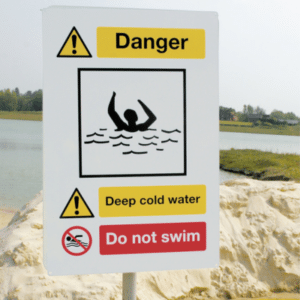
Trespassing signage should be used as part of perimeter maintenance around the site, dissuading the general public from entering a quarry. Amongst other hazards, it is not unheard of for members of the general public to enter (often disused) quarries and decide to take a dip in the icy cold, deep waters. Despite advertising campaigns, unwitting individuals put themselves and risk of cold water shock and tragically in 2018, 8 males between the ages of 13-31 lost their lives within disused quarry lakes in the UK.

Stocksigns can supply signage for quarries that comply with Quarry Regulations 1999 and conforms to British Standards BS5499. This range includes electrical warning signs, machinery safety notices and water safety signs for quarries and aggregate sites.

Prohibition - No Unauthorised Entry Sign on a brick wall

Back in 2010, in our transition from silk screen to digital printing, we brought a first-generation swissQprint Impala. This machine, which was the 15th swissQprint machine to be placed in the UK, has served us for around 12 years – and has only broken down 3 times in this timeframe. Many years of printing later, we decided it was time for an upgrade.

Reliability and sustainability were the two key factors in our decision-making, with print quality being a no-brainer!

And so, after months of researching the market, we approached swissQprint again – and brought ourselves a new printer.

The new fourth-generation Impala is three times faster than our old one and much more sustainable. The Impala 4 prints the same volume of media whilst using just 10% of the energy of the old one, thanks to its UV curing capabilities and reduced power consumption requirements. Sustainability was a key factor in our decision-making, with the reductions in emissions and electricity savings of this new printer being a key stepping stone in our goal to reach Net Zero by 2030.

This new Impala 4 printer marks the 100th machine in the UK.

SwissQprint Impala 4 Installation Video

Stocksigns Ltd has implemented a new Quarterly Volunteering Programme for 2023, and to kick off, a small team from different departments had a mucky Friday out-of-office helping out at Surrey Docks Farm. Corporate social responsibility is something we feel very strongly about and we know the value and importance of giving back to the community.

Who are Surrey Docks Farm?

Surrey Docks Farm is a working city farm and charity that enables the whole community to learn about farming, food production, and the natural environment. They deliver a range of accredited training projects for adult students with learning disabilities and get involved with community projects. They are also particularly reliant on donations to help them stay open so volunteering is essential for them to keep going strong.

So what did we do?

We were welcomed by the lovely Gemma who gave us a tour of the farm where we learned all about the charity and the community projects that they run. There was also a young group of pupils from their Forest School on the day. The Forest School is a long-term program that teaches through play, exploration, and healthy risk-taking solving real-life problems, and building self-belief and resilience through hands-on experiences. More of their workshops can be found here

Our guide and supervisor for the day Gemma, pointed out that they have large rainwater tanks, around the site which the farm uses to harvest rainwater from the building roofs which they use to flush the toilets for most of the year.

Surrey Docks Farm 2023 Group

Little did we know, the site, a former wharf, has had at least seven different uses over the last 300 years – most of which have left something behind that we can see at the Farm today, from physical structures to artifacts found on the foreshore. You can read more about it here

Following the tour, we had our health and safety briefing when it was time for us all to muck in and muck out!

 Time to get to work

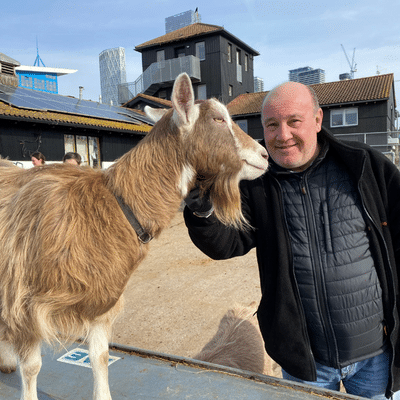
We worked hard in the morning on animal care duties: mucking out the goats, sweeping the goat’s yard (two minutes later it needed doing again!) grooming and mucking out the donkeys, sweeping the sheep’s yard, and taking the younger goats for a walk!

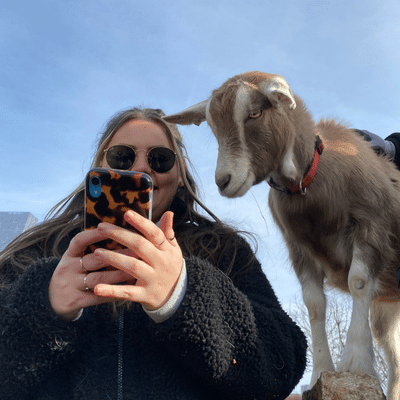
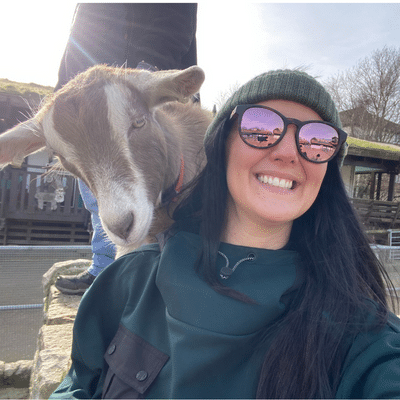
We all had time for a goat selfie or two!

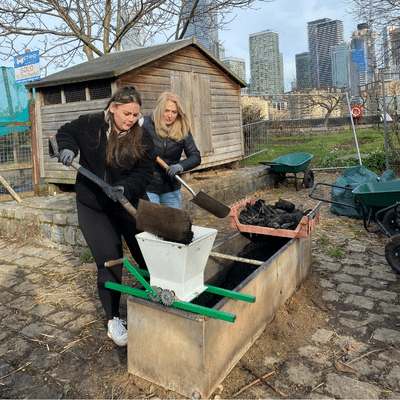
The fun part was taking it in turn, to work on biochar processing to add to their compost production, by the end of the day some of us had great techniques.

Surrey Docks Farm 2023 Curious Goat
Surrey Docks Farm 2023 Biochar
Surrey Docks Farm 2023 Goat Selfie

After an action-packed morning, in the afternoon we were hard at work again. This time digging, wheeling & spreading woodchips on the wildlife garden paths. This back-breaking task involved moving the wood chips from one end of the farm to the other to then lay it all out. Not only was this A great team-building exercise to finish off the day! We left the farm feeling so good on that Friday. #Feelgoodfriday!

It’s all about giving back

Surrey Docks Farm is an exceptional cause that educates and helps their local community whilst being sustainable at the same time. Volunteering not only comes with a touch of team-building and cute goats, but this day of hard work is vital for the farm to keep operating and keep doing the great work that they do.

Stocksigns’ Quarterly Volunteering Programme has been set up as part of their overall CSR business initiatives. Alongside offsetting carbon emissions, lowering our carbon footprint, and climbing a mountain every year for fundraising, volunteering will now mean we can directly support local communities and charities.


Follow us on LinkedIn to stay up to date with the busy Stocksigns team. 

Surrey Docks Farm 2023 Goat Cuddles
Surrey Docks Farm 2023 Sheep
Surrey Docks Farm 2023 Mucking Out

What is UKCA/CE Certification?

UKCA/CE marking is a self-certification scheme, meaning that when a product is UKCA/CE marked, the manufacturer has verified compliance with the essential health and safety requirements as indicated in the applicable European product directives and regulations.

Every permanent Road Traffic sign which is installed on a public highway must be UKCA/CE Certified.

Stocksigns is a member of ARTSM (Association for road traffic safety and management), as such all of our UKCA/CE signs meet the EN 12899-1-2007 standard.

You can read the GOV guidance on UKCA Marking here.

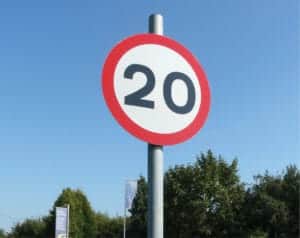
UKCA Traffic 20mph speed sign

Why choose Stocksigns for your UKCA Traffic and Car Park Signage Requirements?

  • 2-3 working days lead time.
  • Dedicated Account Manager
  • Made by a fully accredited and Certified Manufacturer
  • Long-lasting, high-quality signs
  • Every type of CE sign is available from warning road traffic signs and directional traffic to speed limit signs.

EV Charging Point Signs

With an estimated 715,000* zero-emission Battery Electric Vehicles currently on the UK’s roads and plenty more on the way, it is becoming increasingly important to install new charging points across the country. Highlight the charging points on your premises with our EV charging point signage.

*Estimated number of EVs according to the RAC

Applications for UKCA Traffic and Car Park Signage

  • Construction site Temporary Parking Signage
  • Electric Vehicle Charging points
  • Industrial Car Parks
  • Facilities Management
  • UK Highways

Case Study: Supplying traffic signs in Gloucestershire with Knights Brown

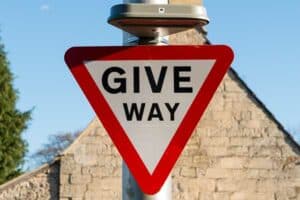
As part of Gloucestershire County Council’s £150 million scheme to improve its highways, Knights Brown installed a series of designated crossing points, widened the junction, and raised the level of the surrounding roads. Stocksigns provided a number of mounting directions, speed limit and give way signs that helped to improve motorist and pedestrian safety.

Knights Brown Case Study UKCA Traffic and Car Park Signage Blog

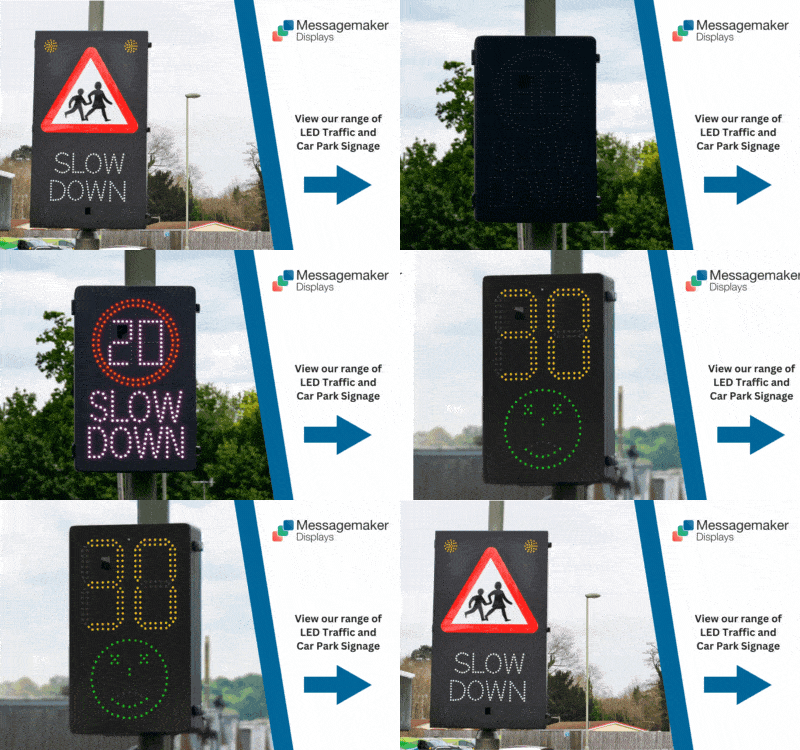
LED Traffic and Car Park Signs from Messagemaker Displays

Our sister company, Messagemaker Displays has developed a range of high visibility vehicle activated LED signage solutions which are suitable for highway or site safety use – helping you meet road safety targets and enforce speed limits. The team also design and make a wide range of standard and bespoke LED text and numeric displays for use in car parks or close distance traffic management applications.

Messagemaker Range GIF Image

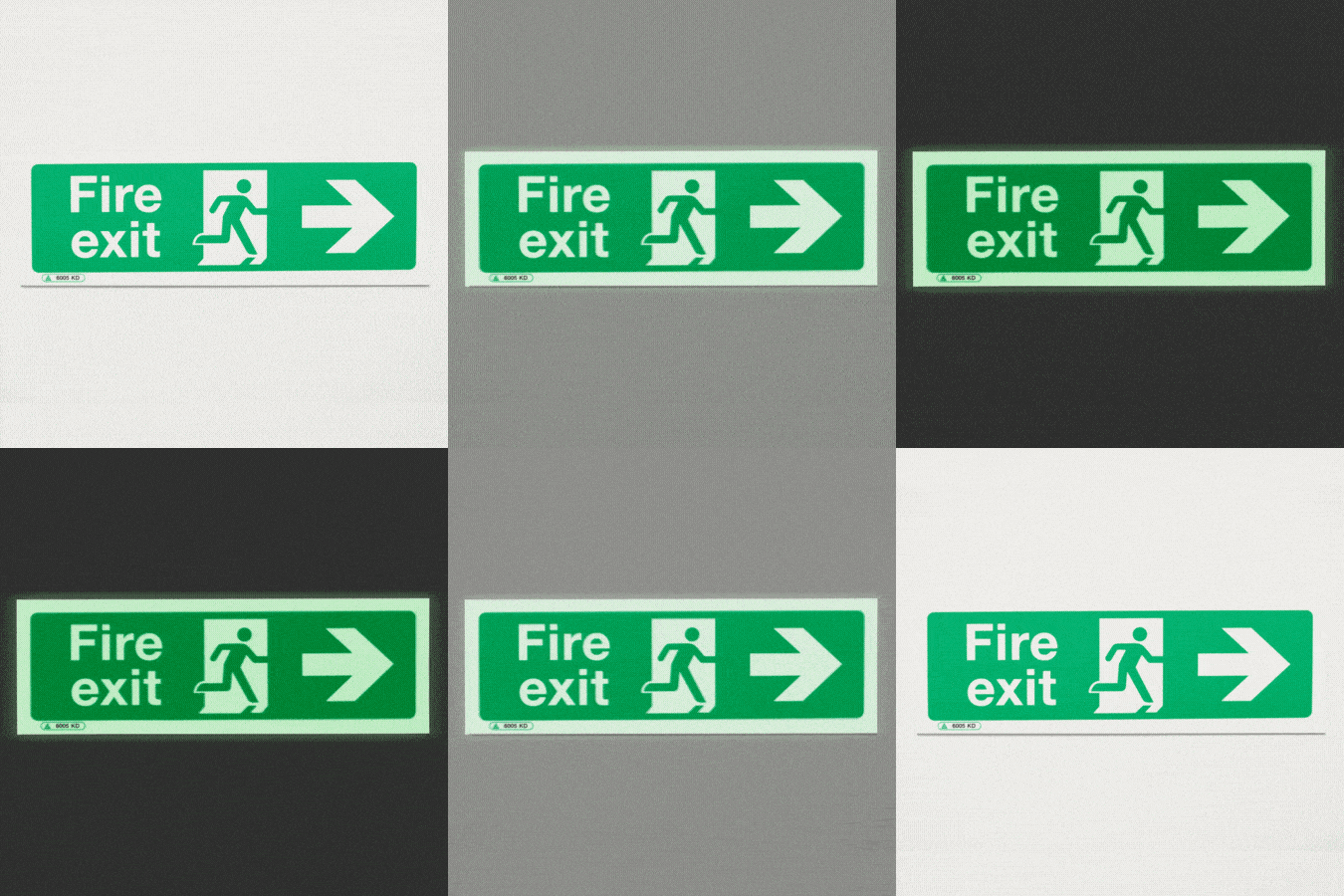
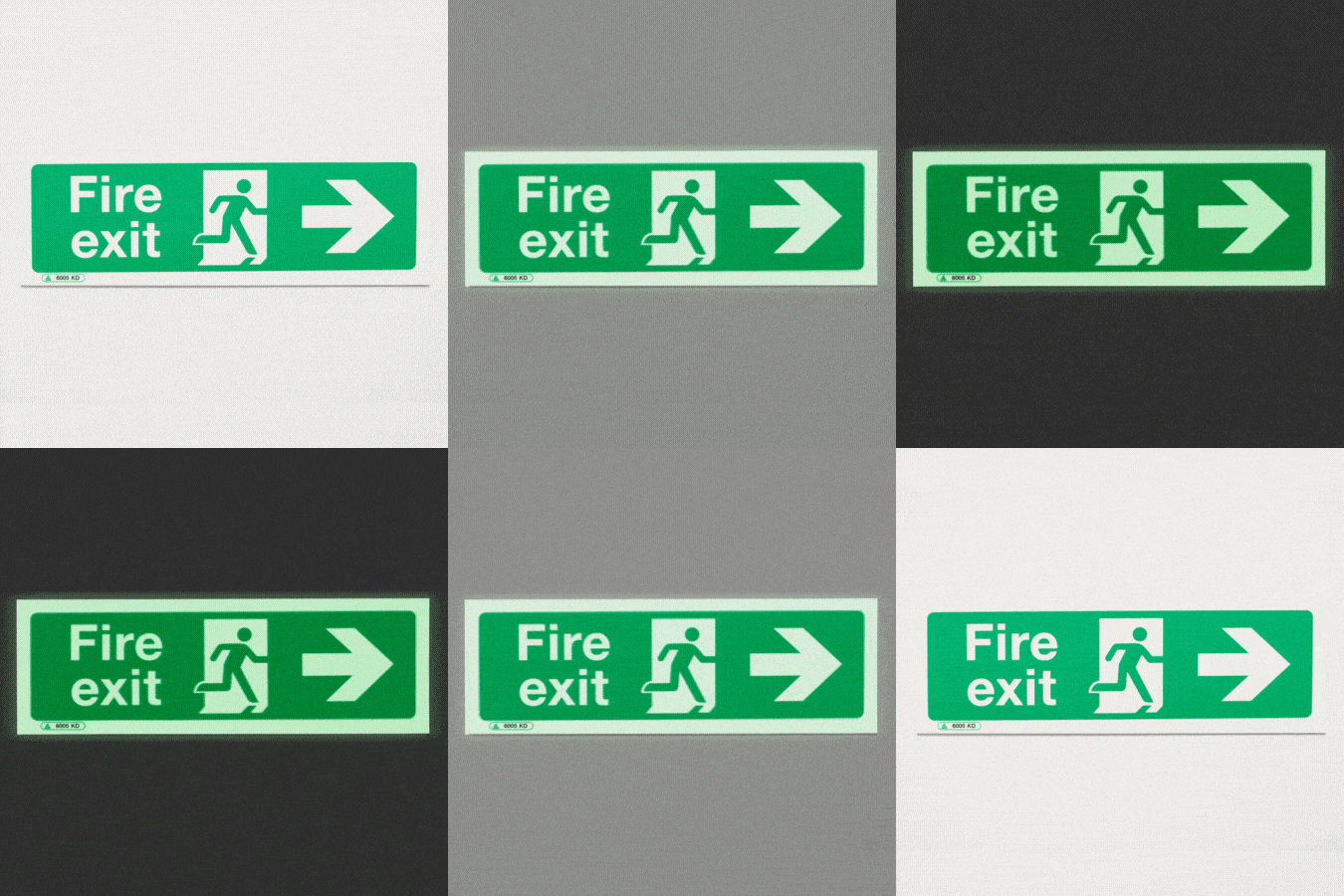
How do Photoluminescent Fire Safety Signs work?

Photoluminescence occurs when a material absorbs photons (light energy), stores and then emits them back when the light source is removed i.e. in the dark, creating a noticeable lighting effect. Our Photoluminescent safety signs are designed to absorb photons from ambient light and then re-emit them in darkened conditions.

For your signs to be effective they will require initial activation from a good light source – this can be either natural or artificial.

Why choose Photoluminescent Fire Safety Signage?

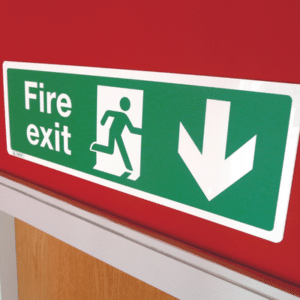
In the event of an emergency, photoluminescent signage is the optimal solution. Visibility can be greatly reduced in a power cut or fire, with traditional electrical exit signs being susceptible to a loss of electricity and potential damage from structural shock and falling debris. Photoluminescent signs do not require electricity and are highly visible even in total darkness, making them perfect for providing your customers, visitors and staff with the essential information that they might need in an emergency.

Photoluminescent Fire Exit Sign Animated GIF

Optimise your site’s safety with our range of Photoluminescent Fire Safety Signs

Fire Safety signs

Hazard signs

Prohibition signs

First Aid Signs

Wayfinding Signage

Cost Savings

With an internal lifespan of up to 25 years, these signs can also help you save money by not using electricity. Photoluminescent Fire Safety Signs are also cost-effective as they do not require maintenance – bypassing the need for costly regular testing regimes that are associated with ensuring the correct functionality of electrical signs.


Reduce your Carbon Footprint

Being lit 24 hours a day, 365 days a year, traditional electrical signs are environmentally unfriendly due to their never-ending demand for electricity. Reducing your number of electrical fire exit signs and opting for their photoluminescent counterparts is a cost-effective way to reduce your carbon footprint.

Often recognised as best practice in the UK, photoluminescent sign systems have also been adopted throughout the EU and USA

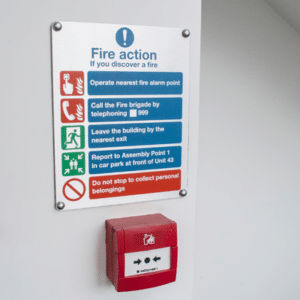
Fire Safety Sign Blog - Fire Action
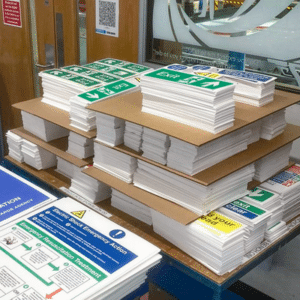
Fire Safety Sign Blog - Printed Signs
Fire Safety Sign Blog - Fire Exit Sign
In addition to performing as a construction site perimeter, hoarding can be an incredibly useful tool for developers. It can function as a platform to display eye-catching advertising or critical safety messages. Alternatively, it can be used to help a building site blend into its surrounding environment. In this blog, we explore these possibilities further and look at how Stocksigns can work with developers to create the perfect hoarding.  

Legal requirements

Since the publication of the Construction Regulations 2015, a building site is legally required to feature a protective boundary to ensure the safety of the general public. There are no set limits to the height, but most sites opt for hoarding of at least two metres in height to provide an adequate level of coverage. In urban environments or where there is an increased likelihood that a child may attempt to gain access, a higher fence may be needed.

Messaging opportunities

Given hoarding is a necessity, it makes sense to utilise the opportunity it also provides to display messaging or imagery. For example, health and safety signage is often printed on hoarding, to alert those who enter the vicinity or are nearby of potential site hazards. This can also keep costs down as developers will not need to buy additional safety signage. Alternatively, hoarding can be used to advertise the development itself, the companies involved or even an investor’s business.

Care UK Hoarding Panels Construction

On the other hand, the space could be used to highlight the steps the developer is taking to lower environmental impact or how the site is contributing positively to the local community. In this way, the hoarding can act as a cost-effective alternative to a billboard.

Aesthetic appeal

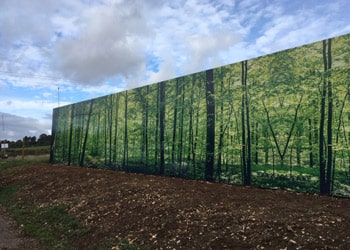
One major advantage to putting imagery on a hoarding system is that it makes the site look visually more appealing and professional. Developers seeking to maximise aesthetics during construction – and minimise the impact of the site on its surroundings – might look to specify hoarding that blends in with the environment. For example, hoarding with an image of a woodland in a particularly rural location, or an image of the sea could work well in a coastal setting.

The visual impact of a building site is being increasingly emphasised by organisations such as the Considerate Constructors Scheme (CCS). Every organisation that is registered with the scheme commits to conforming to the Code of Considerate Practice, which has three key areas: Respecting the Community, Care for the Environment and Value their Workforce. Once a project has been completed it will be scored out of 50. If a developer optimises the use of their hoarding, regularly updating it and keeping it clean and graffiti free, they can improve their score considerably.

Our hoarding offering

Unfortunately, many developers do not maximise their hoarding and settle for plain panels or temporary fencing. Whilst this may be cheaper in the short run, developers that choose this option forfeit a fantastic messaging opportunity.

Here at Stocksigns, we can provide a full, bespoke and cost-effective hoarding service for either small independent construction sites or larger commercial projects. Our team can help to produce artwork or make any supplied artwork print ready to bring the design to life.

What’s more, we are committed to sustainable practices. When a customer approaches us and gives us the specification information such as the intended life span, length and height, we can offer hoarding that is completely recyclable. This could be ideal for developers looking to improve the environmental credentials of their projects or are registered with the CCS.

HS2-Hoarding. Stocksigns construction

Stocksigns can also provide banners that are used to cover scaffolding. This provides a lower budget opportunity to brand a site or to advertise. Rather than being thrown away, these banners can be taken down, transported between sites and re-used.

Ultimately, hoarding presents developers with a great opportunity to communicate with the public, increase their own environmental credibility and improve the aesthetic impact of their construction site. Get in touch to maximise the potential of the hoarding on your next project.

Find out more about Stocksigns’ hoarding solutions

Is your high-rise building compliant with the recent legislation update?

Introduction

Do you know of the latest regulatory Reform (Fire Safety) Order 2005 (Fire Safety Order) update? Part of the update is a need for essential, life-saving signage in high-rise buildings.

Being one of the UK’s leading safety sign manufacturers we have been helping our customers improve the safety of their buildings through general safety signs, floor identification and wayfinding signs for years. However, now there is a deadline!

From the 23rd of January, there are a number of legal requirements for high-rise blocks of flats, in response to the Grenfell Tower Inquiry Phase 1 report.

A lot of buildings have had their signage put in, but if you haven’t gotten around to it, don’t panic! We are here to help.

Wayfinding Signage Requirement

Part of the regulations is the installation of Wayfinding signage. In a nutshell, you need:

– Signs that are visible in low light or smoky conditions
– Identified flat and floor numbers
– Signs located in stairwells and common areas
– Signs must be in a Sans Serif font (so it’s easy to read)
– The design must be highly contrasting so it is easily legible

Contact Us

Contact our expert, friendly team here now and they will walk you through the process and get you some high-quality compliant signage manufactured.

Call: 01737 774072

Or

The main principles to follow in the Regulatory Reform (Fire Safety) Order 2005 Update

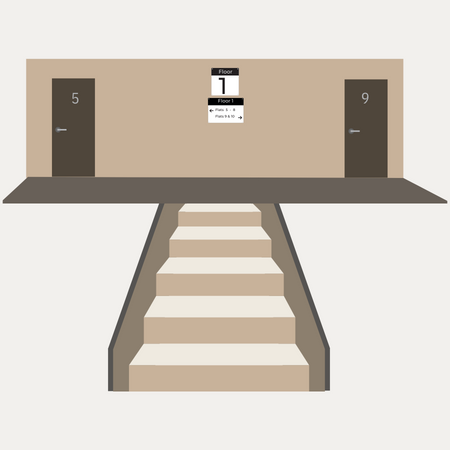
When firefighters reach the landing of any stairway, there should be signage that clearly indicates to them the floor number on which they are located and the flat numbers on that floor.
Stocksigns Solution: High-quality, compliant signs, including Floor Markers, Wayfinding and Flat Floor Directory for lobby areas.
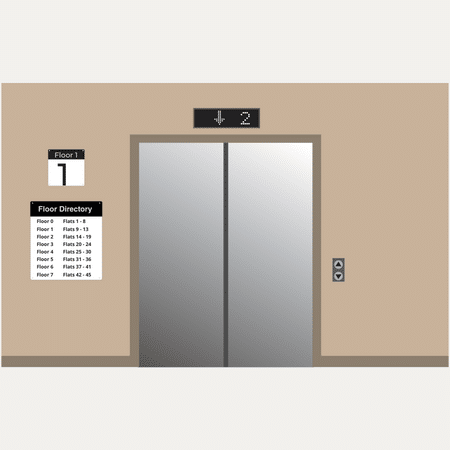
When firefighters use a lift designed for their use to reach floors, the same signage should be clearly visible to them when the lift doors open.
Stocksigns solution: We’re up to date on the legislation and will have recommended signs for you.
The signs must be visible both in normal conditions and in low lighting or smoky conditions.
Stocksigns Solution: Have you thought of using Photoluminescent signage? A popular choice with Stocksigns’ customers in the event of low light conditions. If you need us to design the sign, they will be high contrast and easy to read.
Regulatory Reform (Fire Safety) Order 2005 Update - New signs at the top of the stairs from Stocksigns
Regulatory Reform (Fire Safety) Order 2005 Update - Elevator Fire Safety Signage Example
Photoluminescent Fire Sign animated image

Sign Specifications

Don’t worry, we have this all-in hand! Stocksigns have made it super easy to ensure, most importantly, that your signage meets the legal requirement, whilst still looking good even when there isn’t an emergency.

The team have created an efficient process tailored to this legislation update to get your signs up in no time.

A Quick Outline of the Regulation Requirements

We have outlined the basics and provided links to official legislation for the full information and official guidance to help you comply with the latest update to the Regulatory Reform (Fire Safety) Order 2005 (Fire Safety Order).

External Wall systems

  • Provide information about the design and materials of the external wall system
  • Inform Fire and Rescue Service of any material changes
  • Provide info related to the level of risk and mitigating steps taken

Lifts and Key Fighting Equipment

  • Monthly checks on the operation of lifts which will be used by firefights and evacuation lifts
  • Check key pieces of all other firefighting equipment
  • Report defects to lifts and equipment
  • Faults to be fixed within 24hrs

Information Boxes

  • Install and maintain a secure information box in the building
  • The box must contain the name and contact details of who is responsible for the building
  • Must also contain hard copies of the building floor plans

Wayfinding Signage Requirement

  • Must be visible in low light or smoky conditions
  • Identified flat and floor numbers
  • Located in stairwells and common areas

Building Plans

  • Must include locations of key firefighting equipment
  • Provide electronic copies
  • Place hard copies in a secure info box on site

All requirements in the update

GOOD PEOPLE AND GOOD VALUES – IS A GOOD SIGN

Here at Stocksigns and Messagemaker Displays – our corporate social responsibility is something we feel very strongly about.  With the end of the year almost upon us, it’s an ideal time to reflect on the achievements we’re proud of and look towards the new year with a clear focus on our aims. Here, Danny Adamson, Managing Director, shares more.

I have always felt that a good business is one that is both ethical and accountable to itself, with people that are respected and valued for their contributions. For me, the aim has always been to create a workplace that’s just a great place to be. That’s the foundation of the culture here and I really feel that our staff value this too.

We also want to run a successful business in a sustainable manner; in a way that limits our impact on the environment and sees us genuinely give back to the communities around us.

I appreciate a lot of organisations might say something similar when asked, but I like to think that here, when we say we’re going to do something – we do it. I’m incredibly proud of what we have achieved this year and we manage our CSR approach daily through the following:

Our people

We invest in time, training and well-being initiatives to help keep our staff happy, healthy and motivated. From Pilates sessions, health checks and team walks, we also introduced a cycle to work scheme and put mental health support in place. For professional development, we offer bespoke training and coaching to allow individuals to reach their full potential – with recognition awards and regular team building events to help us to connect and socialise..
Efficient, progressive and sustainable

When it comes to manufacturing and supplying signage, we ensure that we use non-PVC, recycled sign materials wherever possible, reducing manufacturing waste and energy use. Through Messagemaker Displays, our commitment to product innovation means our energy efficient LED signage is compatible with renewable power sources and IoT technology.
Environmental impact

We are actively measuring, target setting, reducing and offsetting our carbon emissions so I am proud to say we are Carbon Neutral. We are currently three years into measuring our carbon footprint and we’re on the path to Net Zero – which we aim to have achieved by 2030. Given the nature of our business, our main challenge in terms of reducing carbon emissions is our fleet of cars and vans– so we have plans in place to tackle this next year.

Charity fundraising

Customers and followers of our social channels will be aware just how committed we are when it comes to raising funds. Over the last five years I am incredibly proud that we have raised over £47,000 for vital charities. Our staff have slept rough for homelessness charities, climbed mountains in Slovenia and hiked the Jurassic Coast – and with the support of our generous sponsors – continue to raise the bar year on year

Stocksigns want to become net zero by 2030

New year, new challenges

So, what’s next for Stocksigns and Messagemaker Displays in 2023?

  • I’m delighted to announce we will be heading to Slovakia to climb Mount Rysy and to undertake two hiking routes through Paradise Park for charity
  • We will also be implementing a quarterly staff volunteering scheme
  • The launch of a completely PVC free range of signage by 2024
  • The implementation of an end-to-end signage recycling scheme
  • We will make the switch to electric and hybrid vehicles for our fleet
  • Finally – we want to introduce renewable technology and power across our business

We’ll be keeping our customers and followers up to date on our progress in the coming months. As ever, there will be challenges, and a huge amount of work being done behind the scenes to make this all happen. However, I know that with such a passionate and committed team here, we can achieve it.

Environmental, Social, and Governance (ESG) is becoming an integral part of business strategy across the world. Sustainability is a key focus for both businesses and individuals alike – we only have one planet after all.

Here at Stocksigns, we are dedicated to keeping our planet alive whilst creating a sustainable supply chain for our customers.

By applying a positive & innovative approach we will overcome problems and embrace new and exciting opportunities together. In taking this approach, we will nurture a great place to work, allowing us to reach our full potential and ultimately share in the company’s success.

Sustainability sits at the heart of all our innovations.


Every progressive step must be a step towards lowering our carbon footprint and making a positive impact on our environment

Net Zero by 2030

We are dedicated to help create a better environment for wildlife, people and the planet – for both current and future generations.

We are actively measuring, target setting, reducing and offsetting our
carbon emissions in order to reach our goal of becoming Net Zero by 2030.

We are working toward this goal through:

  • REDD+ Protecting the Amazon and UK Trees
  • Providing Clean Cookstoves in Kenya
  • Renewable Energy, delivering wind generation in India

Sustainable Manufacturing

As both a manufacturer and supplier, we recognise that we have an impact on the environment. Through reducing our waste, providing innovative products and recycling, we are able to help keep our planet healthy whilst also sharing the environmental benefits to our customers.

Our sustainable offerings include:

  • Providing Non-PVC, recyclable sign material
  • Reducing manufacturing waste

Charity

We know the value of giving back to the community. Every year the team takes part in fundraising events. These include challenging hikes and climbs and sleeping rough to raise funds for the homeless.

Here are some of the charities that we support:

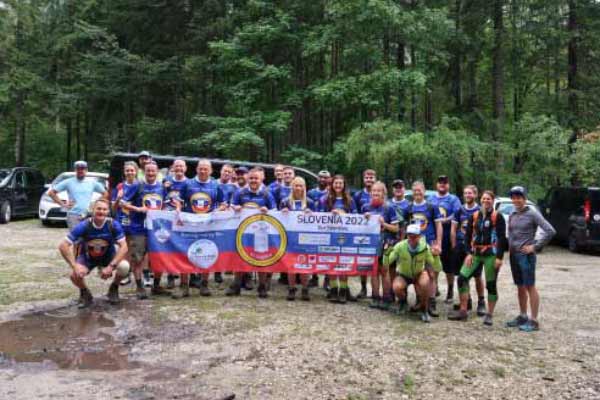
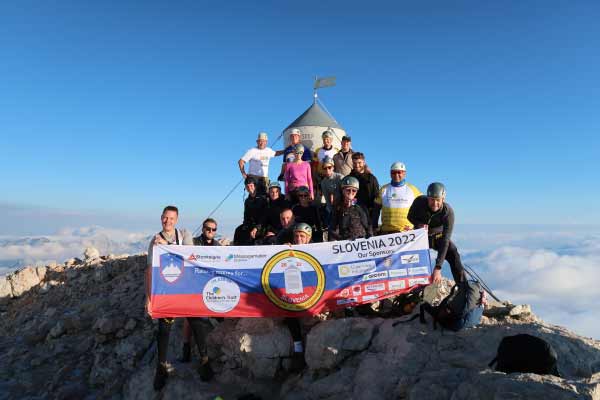
This year, our team spent two days climbing Slovenia’s largest mountain in order to raise money for The Children’s Trust.

The Stocksigns Sustainability Roadmap – coming 2023

An important part of any construction site, safety signs are designed to communicate clear, concise messages. Failing to understand the message of a sign puts workers in danger of significant injury, which, in some cases, can be fatal.

Generally, safety signs should follow ISO 7010 which is an established system for the standardisation of safety symbols. This way everyone can understand the important safety message. Site signage can be customised to match a company’s branding but the text and symbols must be clear so that needless accidents are avoided.
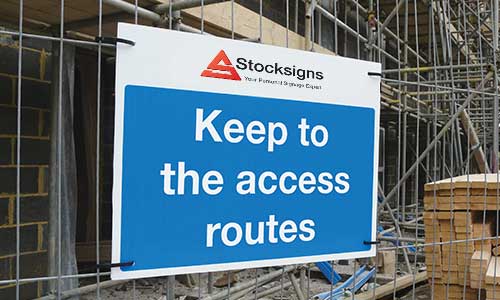
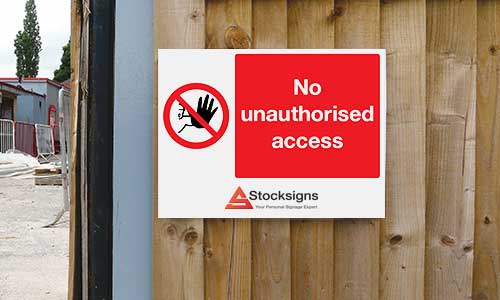
Here, we take a look at the different types of signage that are both required and commonly seen on a construction site – a quick and useful training tool for workers and site visitors.

Warning Signs

Unlike others, this type of signage does not give instructions on what to do. Rather, it is intended to make individuals aware of a danger or hazard. They are found both inside and outside a construction site, with the text such as ‘Warning, Construction Site’ outside, or perhaps “Warning, Scaffolding incomplete” on site.

In terms of design, the symbols will follow ISO 7010 so there will be a black icon inside a black triangle on a yellow background.

When to use hazard and warning signs:

  • Electrical Hazards / High Voltage
  • Wet Floors and uneven surfaces
  • Asbestos
  • Scaffolding warnings
  • Working at height
  • Plant and heavy machinery
Site-Sign-Hazard-Warning

Mandatory Signs

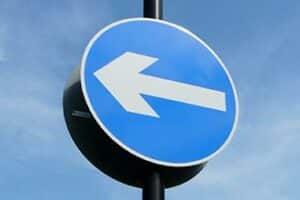
Mandatory signs focus more on immediate action – they inform an individual of what they must do in order to keep safe, such as “Safety harness must be worn.” They are presented as a blue circle with white images and/or text in front.

When to use mandatory signs:

  • Enforcing PPE Requirements
  • Site Traffic Management
  • Visitor Information
Site-Sign-Mandatory

Prohibition Signs

Prohibition signs are the reverse of mandatory signs – rather than instructing an individual on what they must do, these signs communicate to an individual what they must not do. This type of sign is often found at the entrance to a construction site, with text such as ‘No unauthorised access’, or “Keep off scaffolding”.

Prohibition signs are circular with a white background, red border, and red diagonal line across the center. Any text must be white and on a red panel below the sign.

When to use prohibition signs:

  • Entry Restrictions
  • No Smoking
  • Parking restrictions
Site-Sign-Prohibition

Safe Condition Signs

Safe condition signs are those that alert people of a safe location in the case of an emergency. They can also be used to demonstrate where emergency equipment is kept when accidents occur.

This type of signage is a solid green square or oblong with a white symbol that is often accompanied by text.

When to use safe condition signs:

  • Fire Exit and emergency escape routes
  • First Aid station marking
  • First Aid equipment identification


Site-Sign-First-Aid

Fire Equipment Signs

Although safe condition signs are used to locate emergency equipment in cases of accidents, a different type of sign is used to locate emergency fire equipment. This is because fires can spread very quickly, meaning the solution needs to be identified and implemented immediately.

Fire equipment signs are red in colour. To make them distinguishable from prohibition signs, they are square rather than circular. They also have white symbols and/or lettering.

When to use Fire Equipment signs:

  • Fire Alarm locations
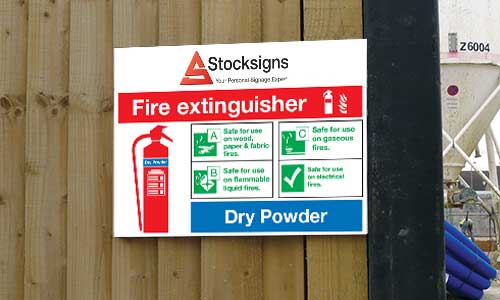
  • Fire Extinguisher identification and use
Site-Sign-Fire-Equipment

Keep this site safe

As obvious as some of these may be, understanding site signage is essential in avoiding accidents. The construction industry is one of the UK’s most dangerous industries and every little helps in keeping sites safe. By being aware of the different types of signage, site workers will be able to react quickly to any potential hazard and improve on-site safety.

The signage can also help in minimising accidents with the public. Whether this is managing traffic outside a site or perhaps there are pedestrians who need guidance to take safe routes.

Site managers can further help improve the effectiveness of their safety signs by sourcing signage that is of high quality and is compliant with the latest safety standards – BS EN ISO 7010. At Stocksigns, we have been a leading UK supplier of UK safety signage since 1955 and have a wide range of products that are ideal for construction sites, so we are a good place to start!

Why not take a look at our full construction sign portfolio here.

Signage is absolutely crucial when it comes to reducing the risk of accident and injury. However, even clear safety signage can lose its effectiveness through ‘sign blindness. Here we explore the issue – and how best to avoid it.

What is sign blindness?

Safety signs are designed to be easily understood. They use striking colours, clear symbols and minimal text to communicate a message that should be understood immediately. However, certain factors can interrupt this process, and this is known as sign blindness. There are a number of different ways in which this can occur.

Cluster Blindness

This is when a large number of signs all located in one place overload the individual with information. Every second, an average person experiences approximately 40 million sensory inputs. Out of these, the conscious brain is only able to process 0.02%[1]. Consequently, where there is too much signage, important messages can be ignored.

Therefore, signs should be well spaced out and not contain too much information. Rather, they should be clear and succinct and messaging should be prioritised.

[1] https://www.leveragesafety.com/post/safety-sign-blindness

Over-familiarity

https://www.leveragesafety.com/post/safety-sign-blindness

A safety sign is designed to shock people into or out of action. If people are continuously exposed to the same signs, they can, unfortunately, begin to have less impact. A good example of this is the ‘Fire Door Keep Shut’ sign, which despite its message – may not deter people from wedging the door open on a hot day or if they feel they are going to be entering and leaving frequently.

Unfortunately, there’s not a great deal that can be done about over-familiarity. Rather, facilities managers and site managers should reinforce the message of the sign verbally wherever possible. By doing so, the effectiveness of the sign will be refreshed.

Failing to remove temporary signage

Similarly, temporary signage can easily be ignored if not implemented properly. For example, if a ‘Cleaning in Progress’ sign is up, but there is no longer any cleaning in progress, the impact of the sign is likely to be lost in the future. When the real danger appears, the warning is not heeded because the signage has previously been used carelessly.

As such, it is crucial that temporary signs are taken down promptly after a potential hazard has been removed.

Summary

By being aware of the different ways sign blindness can occur, site managers and facilities managers can take simple steps to minimise the likelihood of its occurrence and improve onsite safety.

Here is our checklist of simple methods that can be implemented to avoid sign blindness:

  • Don’t use more signs than necessary.
  • Ensure that signage is well spaced out, succinct, clear, and visually appealing.
  • Reiterate important sign messages verbally.
  • Be sure to take down temporary signs immediately after the hazard is gone.
  • Use standardised signs.

At Stocksigns, we have delivered a wide variety of bespoke and standardised signage products since 1955 and played an instrumental role in developing the original BS 5499 legislation that has since been incorporated into ISO 7010. A specialist signage supplier, our product portfolio covers a range of applications – from highways to building sites to offices.

Find out more about our products here: https://www.stocksigns.co.uk/stocksigns-shop/

Cluster-Blindness

Every day, millions of people head to work across the UK—some stepping into jobs that carry a much higher risk than others. From construction sites to care homes, workplaces are filled with hazards that, if not managed properly, can lead to serious injury or even death. This is the top 10 most dangerous jobs in the UK!

At Stocksigns, we believe that clear, effective signage is one of the most powerful tools available for keeping workers safe. Whether it’s warning of high voltage, directing traffic on a site, or reminding staff to wear PPE, safety signs play a vital role in accident prevention and life preservation.

Based on data from the Health and Safety Executive (HSE), here’s a breakdown of the UK’s most dangerous jobs—and how the right signage solutions can reduce risk and save lives.

1. Construction – The Most Dangerous Industry

39 fatalities in 2023 | 4x higher than other industries

With falls from height, heavy machinery, and unstable surfaces, construction is consistently the most hazardous industry in the UK.

Signage Saves Lives:

  • Fall Prevention: “Danger: Fragile Roof” or “Use Safety Harness” signs near risky areas help keep workers alert.

  • Machinery Awareness: Clear “Moving Vehicles” or “Keep Clear of Machinery” signs reduce the risk of being struck or crushed.

  • PPE Reminders: Helmets, gloves, high-vis clothing, and eye protection signs ensure workers don’t forget vital gear.

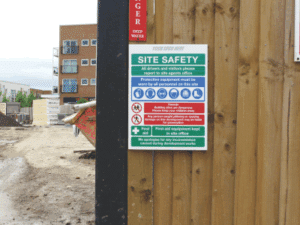
Stocksigns Site Safety Boards

2. Agriculture & Farming

High rates of machinery injuries, chemical exposure, and suffocation

Farmers work in unpredictable environments, often with large animals, heavy equipment, and hazardous chemicals.

Signage Solutions:

  • Chemical Safety: COSHH-compliant signs alert staff to toxic, flammable, or corrosive materials.

  • Silo & Storage Warnings: “Confined Space – Authorised Personnel Only” signs reduce the risk of suffocation.

  • Animal Warning Signs: Indicate areas where livestock are present and advise caution.

Agriculture and Farming is the 2nd most dangerous job in the UK!

3. Manufacturing

Risk of burns, crush injuries, and machinery entanglements

Industrial environments often involve high temperatures, sharp tools, and moving parts.

Signage Matters:

  • Machine Safety: Signs like “Do Not Operate Without Guarding in Place” help prevent accidents.

  • Hearing Protection: Noise hazard signs encourage workers to protect their ears in loud environments.

  • Fire Hazards: Clearly marked fire exits and “No Smoking – Flammable Material” signs are critical.

Mental Health Signage, Shop at Stocksigns

4. Care & Nursing

High exposure to infection, stress, and manual handling injuries

Often overlooked as “dangerous,” care workers face risks every day, particularly from physical strain and biological hazards.

Signage in Care Settings:

  • Hygiene Reminders: “Wash Hands Before and After Contact” signs reduce infection transmission.

  • Patient Handling: “Use Lifting Aids – Manual Lifting Prohibited” improves compliance with safe handling practices.

  • Emergency Info: Clear evacuation maps and fire safety signage save crucial seconds in an emergency.

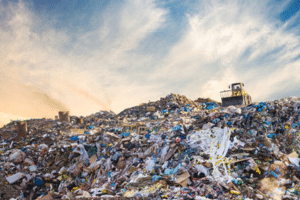
Wate Management is a dangerous job in the UK

5. Waste Management

Exposure to heavy lifting, chemicals, and dangerous machinery

Handling refuse and recyclables is far more dangerous than many realise.

Signage for Safer Waste Facilities:

  • Vehicle Movement: Signs like “HGV Access – Proceed with Caution” help reduce vehicle-related incidents.

  • PPE Enforcement: Ensure gloves, boots, and eye protection are worn.

  • Hazardous Waste Warnings: Clear labelling of hazardous bins protects workers from chemical exposure.

Wate Management is a dangerous job in the UK

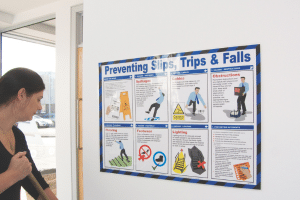
6. Office & Admin Roles

Stress, poor posture, and trip hazards cause more damage than expected

While offices may seem low-risk, prolonged sedentary work, clutter, and stress pose real health threats.

Safety Signage for Offices:

  • Ergonomic Advice Posters: Promote safe workstation setup.

  • Trip Hazard Signs: Mark uneven floors or trailing cables.

  • Mental Health Awareness: Signage reminding staff about available support services can foster a healthier environment.

Office and Administration

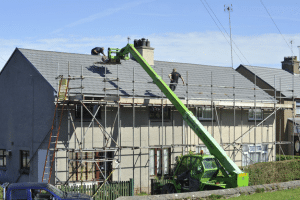
7. Scaffolding & Roofing

Falls account for 29% of all workplace deaths

Working at height is inherently dangerous—often with little margin for error.

Height Safety Signage:

  • Edge Warning Signs: “Caution: Unprotected Roof Edge” signs prevent missteps.

  • Access Notices: “Scaffold Not Complete – Do Not Use” signs alert workers to unsafe platforms.

  • Fragile Surface Warnings: Protect roofers with prominent signage on skylights and brittle materials.

7. Scaffolding and Roofing in top 10 most dangerous jobs

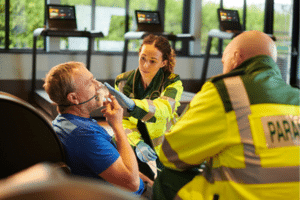
8. Paramedics & Firefighters

Exposure to trauma, disease, and dangerous environments

Emergency responders rely on clear communication to work safely in unpredictable conditions.

Signage in Emergency Services Facilities:

  • Biohazard Warnings: Highlight areas with risk of infection or contamination.

  • Decontamination Instructions: Simple, effective signage can reduce risk after exposure.

  • Stress Support Posters: Reinforce that help is available after difficult calls.

Paramedics & Firefighters Exposure to trauma, disease, and dangerous environments

9. Mechanics

Traps, falls, and flammable hazards are widespread in vehicle workshops

From tools left on the floor to suspended cars, mechanics face danger at every turn.

Workshop Signage Essentials:

Mechanics Traps, falls, and flammable hazards are widespread in vehicle workshops

10. Lorry Drivers

Fatigue, collisions, and health complications pose hidden threats

Truck driving comes with long hours, stress, and significant health risks.

From tools left on the floor to suspended cars, mechanics face danger at every turn.

Signage for Logistics Hubs:

  • Speed Limits & Vehicle Routes: Minimise accidents with directional signage in depots.

  • Driver Health Posters: Remind staff of the risks of fatigue, dehydration, and diet.

  • Rest Break Reminders: Encourage regular breaks to reduce the risk of accidents.

Lorry Drivers Fatigue, collisions, and health complications pose hidden threats

Make Safety Visible

No matter the industry, signage is a critical safety measure. At Stocksigns, we provide a complete range of health and safety signage, custom solutions, and guidance to help businesses meet HSE compliance, reduce risk, and protect lives.

Is your signage up to standard? If you’re unsure, our experts can help assess your current signage setup and recommend improvements tailored to your industry.

Every year the team at Stocksigns/Messagemaker displays with friends like to push themselves above and beyond for the mountain climb for charity. Over the past few years, they have trekked Toubkal, dashed around Dingle, swapped their beds for cardboard boxes in winter, slept rough for the night, and more.

This year we have taken it to a whole another level. That level is above the clouds! Yes, we went to the clouds and above.

After two failed dates, now third time lucky it was finally time to take on the mighty Mt Triglav!

This is Slovenia’s largest mountain and it stands at 9396ft, just shy of 3,000m in elevation. We climbed this mountain for over two days.

The charity for this year’s challenge is The Children’s Trust. The UK’s leading charity for children with injury. Based in Tadworth (local to our Stocksigns/Messagemaker HQ) the Trust runs a range of specialist care, education and therapy services for children and young people from across the UK and is the UK’s largest rehabilitation centre for children with acquired brain injury.

Day 1

The only way is up… we climbed a total of 5025ft elevation.

We walked just over 5 miles to get to the mountain hut. Which doesn’t sound like a lot, it took us just under 5 hours to climb.

When we started at the bottom we were all very chatty, it didn’t take long for it to change, it was a constant climb and the chats became a little breathless. We passed beautiful cows and were lucky enough to spot a couple of Ibex, who looked incredibly graceful walking up and down the side of the mountains, unlike our scrambles!

When we finally decided to lay our heads down for the night, we were not in for a quiet night I am not talking about the snoring and sleep talking, a storm was brewing, and we had thunder and lightning very very frightening!

Slovenia-group
Slovenia Group 4

Day 2

Winter is coming! To the Summit 1200ft elevation.

Forgot whatever heat wave England is having, we have had storms and hail/snow. We are all dressed for the North Pole! Never underestimate extreme and unpredictable mountain weather. Thankfully we had all Come prepared for any weather conditions.

We left the mountain hut at 4.30 am with our guides and safety equipment to make our journey to the summit. The summit is about a 2.5km scramble, this roughly took us 1.30 hours, the climbing route (via Ferrata)… What is a Via Ferrata, you may ask? Well, a Via Ferrata is a mountain pathway that consists of a series of rails, cables, and bridges that lead you from the starting point to the end, walking next to the rock’s face, a tad scary. There were so many technical sections. If you are not one for heights then this is not for you. I’ve never thought of myself as scared of heights, but the via Ferrata definitely had me wondering what the hell I had signed up for, and can only imagine the others were thinking the same too!

That climb was an uphill battle, the struggles some of us were facing were not fun.

When we made it to the top it was all downhill from then!

Eventually, after scrambling on our feet, hands, and even our bottoms, we finally made it. The view was, as I expected incredible, with all the endorphins kicking in, we felt on top of the world.

While we were physically tired climbing up to the peak, it was more about mental fatigue going down. There was lots of bottom sitting and crawling down, we were not graceful like the mountain goats!

We are so pleased and proud to share with you that we raised over £15,000 for the Children’s Trust in Tadworth.

Thank you all for your support and donations, this fantastic amount of money, and will go a long way in helping this fantastic charity.

The Stocksigns team was joined by friends from Balfour Beatty, Gatwick Airport, Nebosh, Tennants  UK, and more. They are proud to share with you that w over £15,000 has been raised for the Children’s Trust.

Slovenia-Group-3
childrens-trust
Slovenia Group 5

May the Force be with you!

Two weeks ago our employees were transported from their present office desk to a galaxy not so far away (Well…in The Den, our games room in the Stocksigns/Messagemaker HQ)

The employees became Jedi Knights for the day and were ready for the games to begin!

We were divided into three teams and played three sports each;  Phanton tennis (table tennis), Palpatine’s pool party (Pool) and  Darts Vader (darts)

Each team worked together as they built new relationships, made great memories, And, most of all… had fun!

Did they learn the ways of the force and were they tempted by the dark side?

They felt the force of laughter and were tempted by the dark side, the dark side being the tasty treats of Hans Rolos, Yoda’s Soda, and Light Sabers!

Star-Wars
Star-wars-4
Star-Wars-3
Star-wars-2

Another Successful team building afternoon from Team Stocksigns.

The construction industry is one of the largest sectors in the UK and many other countries. It is well known for being notoriously dangerous because of the combination of Health and Safety risks involving vehicles, equipment, and manual tasks which few other industries share. That’s where site safety comes in…

According to HSE.gov.uk, the construction industry has the most fatalities than any other in the UK. It is on par with agricultural, fishing, and forestry with the most work-related deaths.

On the job, these construction workers face a wide range of day-to-day vocational safety hazards such as working from a height, falls, slips and trips, moving equipment such as lorries, cranes, noise, vibration, and manual handling, and this is only half of it.

The dangers of working in construction should never be overlooked, and whether you are an apprentice or a site manager, it is the duty of everyone on-site to keep everyone safe.

According to various industry papers and expert blogs, the top 10 health and safety site hazards in construction are as follows.

Working at Height

This is the most common cause of fatal injuries and has become a daily risk for construction workers.

Building construction and demolition often require staff to work from a height which often includes working across several surfaces and platforms without the correct equipment or training is highly dangerous. Injuries can be caused by unstable working surfaces, restricted movement, and misuse or failure of safety equipment.

Reducing the risks.

There are many ways to reduce risks and it all starts with training. Employees must be trained in working on different pieces of equipment and surfaces, such as how to work safely on scaffolding, ladders, and roofs to enable them to safely carry out their work.

All work from height must then be planned, controlled, supervised, and performed within the given procedures. Preventive measures to keep the risks to a minimum can involve the introduction of safety nets, guard rails, and keeping equipment secured among others.

Working-at-height

The primary sources of risk are as follows:

  • Loose equipment stored on roofs or raised pathways
  • Unsecured scaffolding or ladders
  • Unprotected edges
  • Lack of safety nets or guardrail

Moving Objects

Construction sites are places of constant movement of vehicles, machinery, and equipment. Due to its ever-changing environment, construction hazards continue to change. With many moving objects that you will encounter on a construction site, you will notice that there is a high volume of moving traffic, supply vehicles, diggers, and forklifts all of which move around a usually uneven terrain this can make it difficult to maneuverer around. Therefore, your safety rule should be able to create clear routes for vehicles and ensure that your employees avoid positioning themselves between fixed moving objects.

Construction sites are places of constant movement of vehicles, machinery, and equipment. Supply vehicles, diggers, and forklifts all manoeuvring on uneven ground creates a busy site.

As the building site develops the risks associated with it increased accordingly.

Reducing the risks.

The workforce should wear protective clothing such as high vis jackets to be seen by moving vehicles, as well as steel-toe shoes and helmets to protect them against moving/falling objects. Finally, they should be trained to keep vigilant and aware of their surroundings and to avoid hazards.

Moving-Objects

The primary sources of risk are as follows:

  • Poor working light
  • Heavy-duty vehicles
  • Overhead lifting equipment
  • Little space to manoeuvre
  • Working close to moving objects

Slips, Trips, and Falls

Slips, trips, and falls can happen in almost any environment. Construction sites can sometimes become a maze of equipment, debris, dirt, and more. Navigating around a busy site, even when being cautious can still cause workers to slip and trip. When you consider all the things that happen above it’s no surprise that slips, trips, and falls could happen on an almost daily basis.

Reducing the risks.

A good start is to provide designated walkways with good conditions underfoot and be well lit.  Work and storage areas must be kept tidy with designated areas for waste collection. Any slippery areas should be signposted, and suitable footwear provided with a good grip should be worn.

Other HSE figures show that around 61,000 construction workers sustained non-fatal injuries in 2019/2020 and most of these were slips, trips, and falls (26%).

Slips-and-Trips

The primary sources of risk are as follows:

  • Wet and slippery surfaces
  • Uneven surfaces and ground
  • Loose cables
  • Materials or equipment left unchecked

Noise & Hearing Damage

Much of the equipment used on a construction site generates high levels of noise, whether that’s hand tools, machinery or heavy duty vehicles

Repetitive, excessive noise can cause long-term hearing damage and can also be a dangerous distraction causing accidents.

Reducing the risks.

Make sure you provide your workers with the appropriate PPE in the form of soundproof headphones to reduce the intensity of sound waves. Crews must wear the PPE when working in a high noise level environment so using signage as reminders and instructions will help ensure the PPE is being used.

Noise-&-Hearing-Damage

The primary sources of risk are as follows:

  • Power tools
  • Groundwork equipment
  • Heavy-duty vehicles

Vibration

Operating heavy construction equipment for long periods may expose construction workers to high levels of vibration. Repetitive vibration caused by power tools can severely damage workers’ nerves and blood vessels and can lead to hard-arm vibration.

Reducing the risks

Construction workers should be given appropriate protection when using vibrating tools, and equipment should be well maintained. Other precautions include the use of alternative equipment and implementation of new safety measures, advice on which can be found on the HSE has specific advice for avoiding HAVS which can be read here: https://bit.ly/3wk3weP

Vibration

The primary sources of risk are as follows:

  • Handheld power tools
  • Ground working equipment
  • Vibrating power tools

Material and Manual Handling

Materials and equipment are being constantly lifted and moved around on a construction site, whether manually or by the use of lifting equipment if this is done incorrectly it can lead to severe injuries. Back injuries can be  caused by a lack of training on how to move heavy objects. Workers should bend their legs and lift the heavy items using the leg muscles and not bending their backs.

Reducing the risks.

Where duties involve handling and lifting make sure adequate training is provided with adequate supervision thereafter. Equipment should also be provided for when manual lifting is not possible or unsafe, this could include forklifts or pallet trucks all of which need to be.

material-and-manual-handling

The primary sources of risk are as follows:

  • The repetitive heavy lifting of loads
  • Poor lifting posture
  • Workers cannot see around or over the load they are carrying

Collapsing Trenches

Collapsing trenches with workers inside them is a very common occurrence on-site. Sadly, this can lead to severe injuries or even death

Reducing the risks.

Supervisors should ensure that the trench is fully secured and regularly inspected before and during a work shift. Crews should be issued with proper PPE, and equipment should be maintained. The presence of first aid on-site also helps speed the response in case of an accident.

Trenches

The primary sources of risk are as follows:

  • Trench collapse
  • Falling into excavation
  • Weakened structure due to excavation

Asbestos

Asbestos dust is particularly dangerous as it not only affects workers but also anyone that comes into contact with the particles at home or on the way home. Around 20 tradesman die each week as a result of pas exposure, so the danger is very real and one which corners cannot be cut.

Why is asbestos dangerous? (hse.gov.uk)

Reducing the risks.

If there is asbestos on the construction site, workers must be informed where it is. They must be trained in what to do should they come across suspicious materials that may contain asbestos There are certain rules to be followed regarding licenses for working with asbestos which is essential to be followed. Details can be read here.

https://www.hse.gov.uk/pubns/priced/hsg247.pdf 

asbestos-health-and-safety-images

The primary sources of risk are as follows:

  • Ceiling tiles, thermal paper, wall plaster in older buildings
  • Certain types of insulation
  • Old switch gears and circuit boards

Electricity

Exposed wires and live electrical parts are commonly present on site.HSE reports that 1,000 electrical accidents at work are reported every year. Electric shocks can be a very common cause of falls from ladders and scaffolds. Construction work needs to be organised to ensure that workers can locate and identify.

Reducing the risks.

There are many types of PPE that you could benefit from around electricity; this could include insulating gloves, a face shield or safety glasses, insulating boots, and a flesh protection kit. You must take all of the necessary precautions such as staying aware of the presence of electrical wires, and ensuring that the site has been inspected regularly by a qualified electrical engineer.

Electricity-health-and-safety-images

The primary sources of risk are as follows:

  • Inadequate PPE
  • Lack of adequate training
  • Incorrect testing
  • Not taking precautions

Airborne Fibres and Materials

A lot of dust is produced on construction sites. This is a common danger. Just like asbestos, other fibre and material particles such as dust can cause issues among the health and safety of workers on the construction site.

Reducing the risks.

In order to reduce any risks of getting these diseases from on-site dust and particles, the correct PPE should be used, maintained, and inspected alongside suitable safety measures including the use of water or on-tool extraction to keep dust out of the air.

Matterial-and-fibres

The primary sources of risk are as follows:

  • Damages the lungs and can lead to other diseases
  • The dust is often invisible